

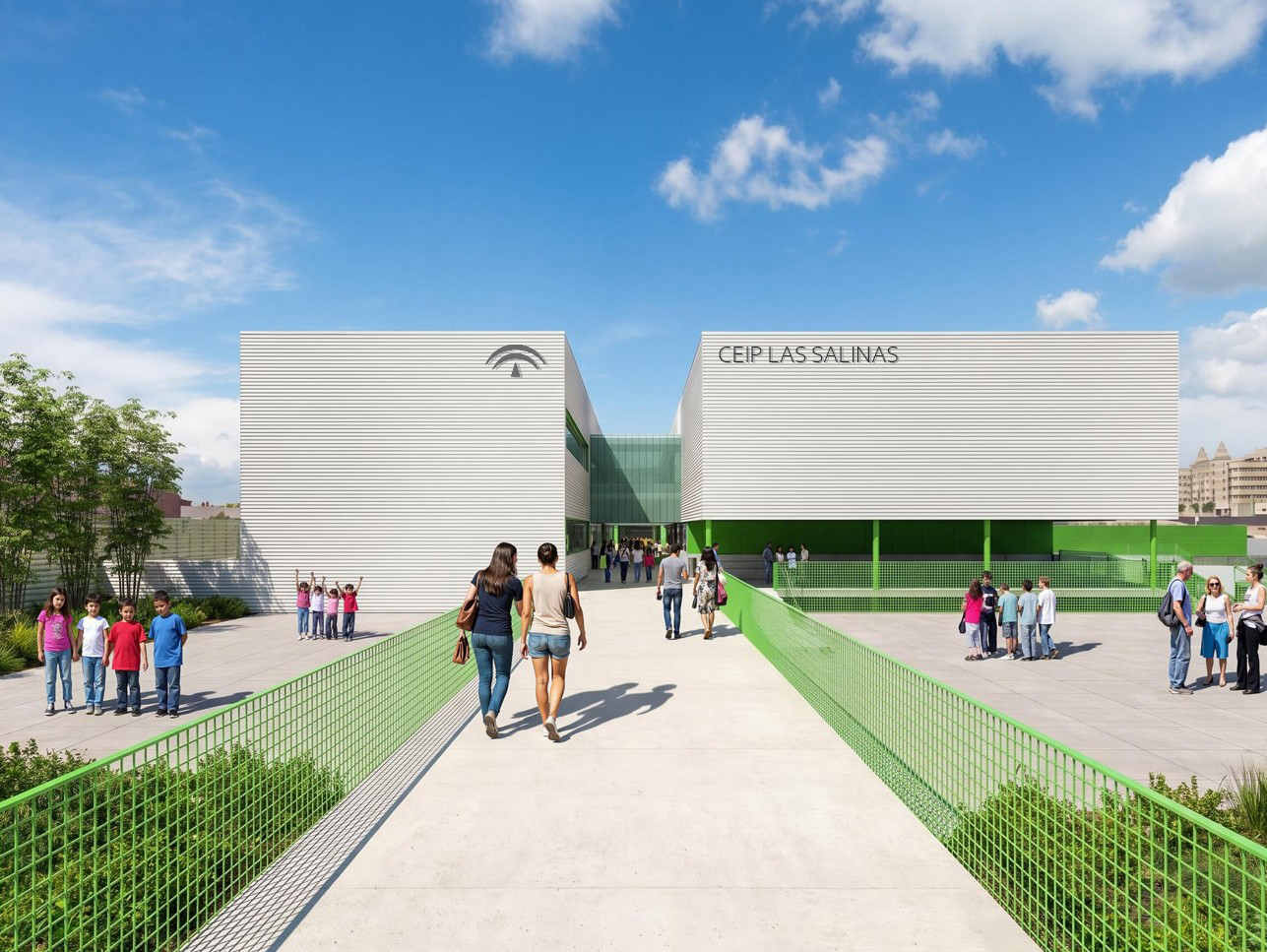
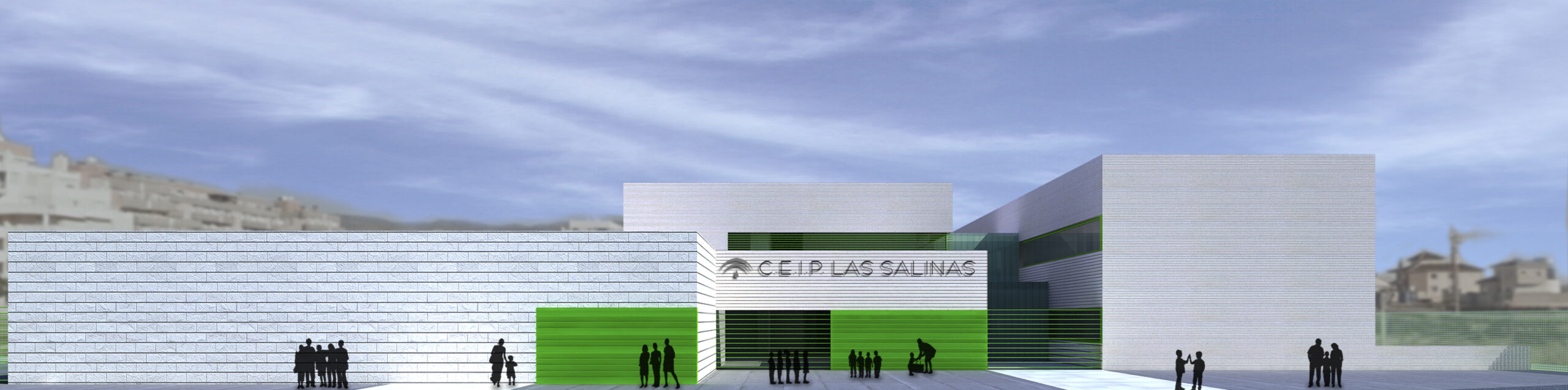
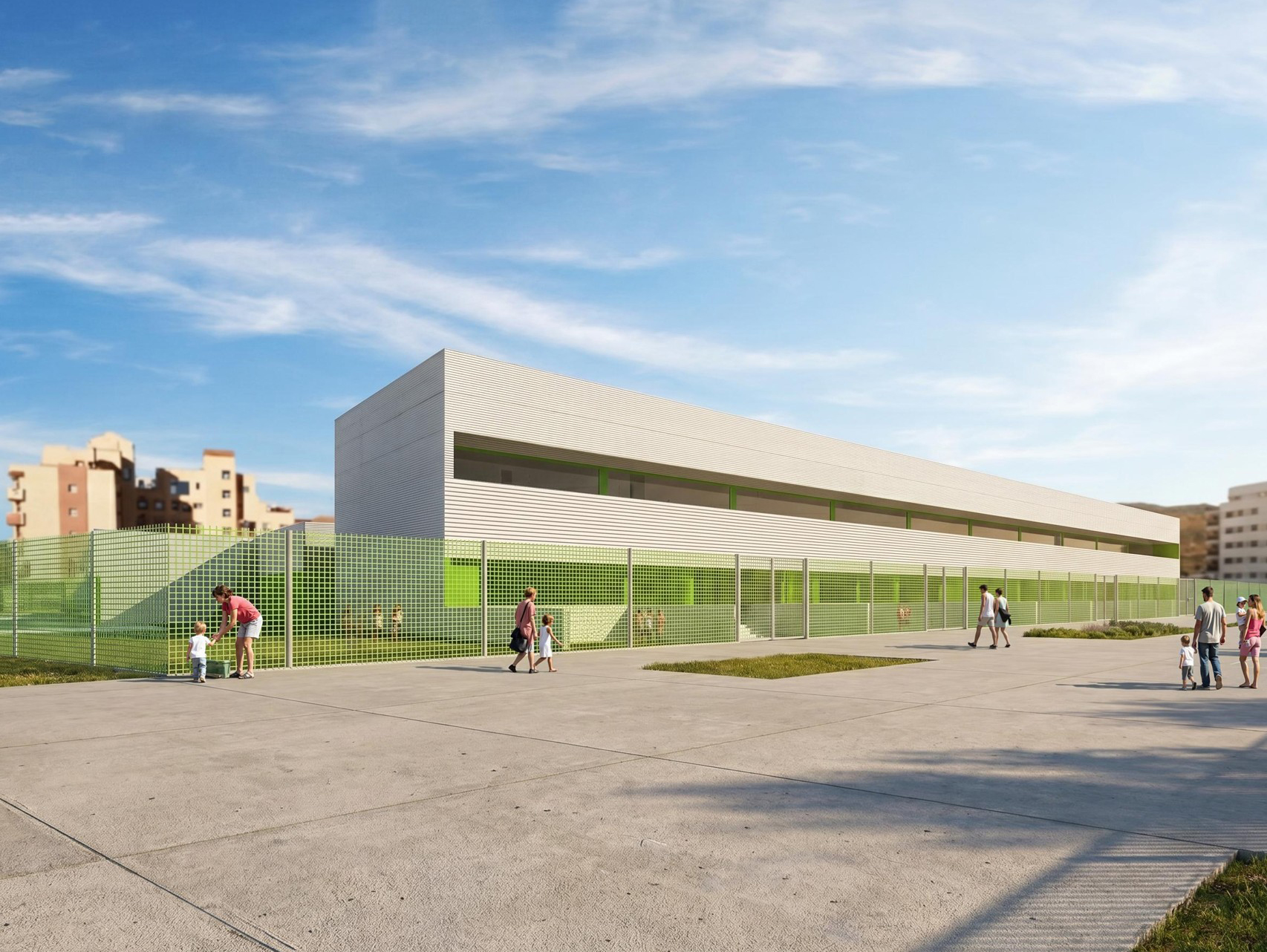
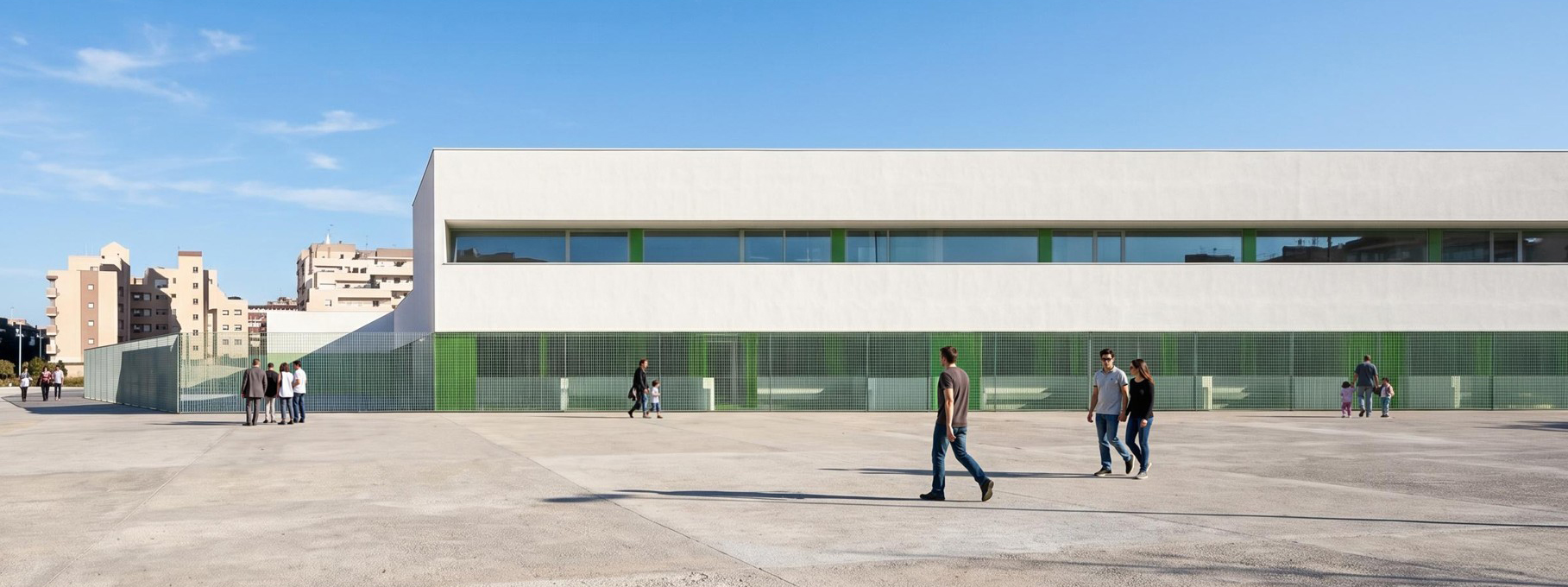
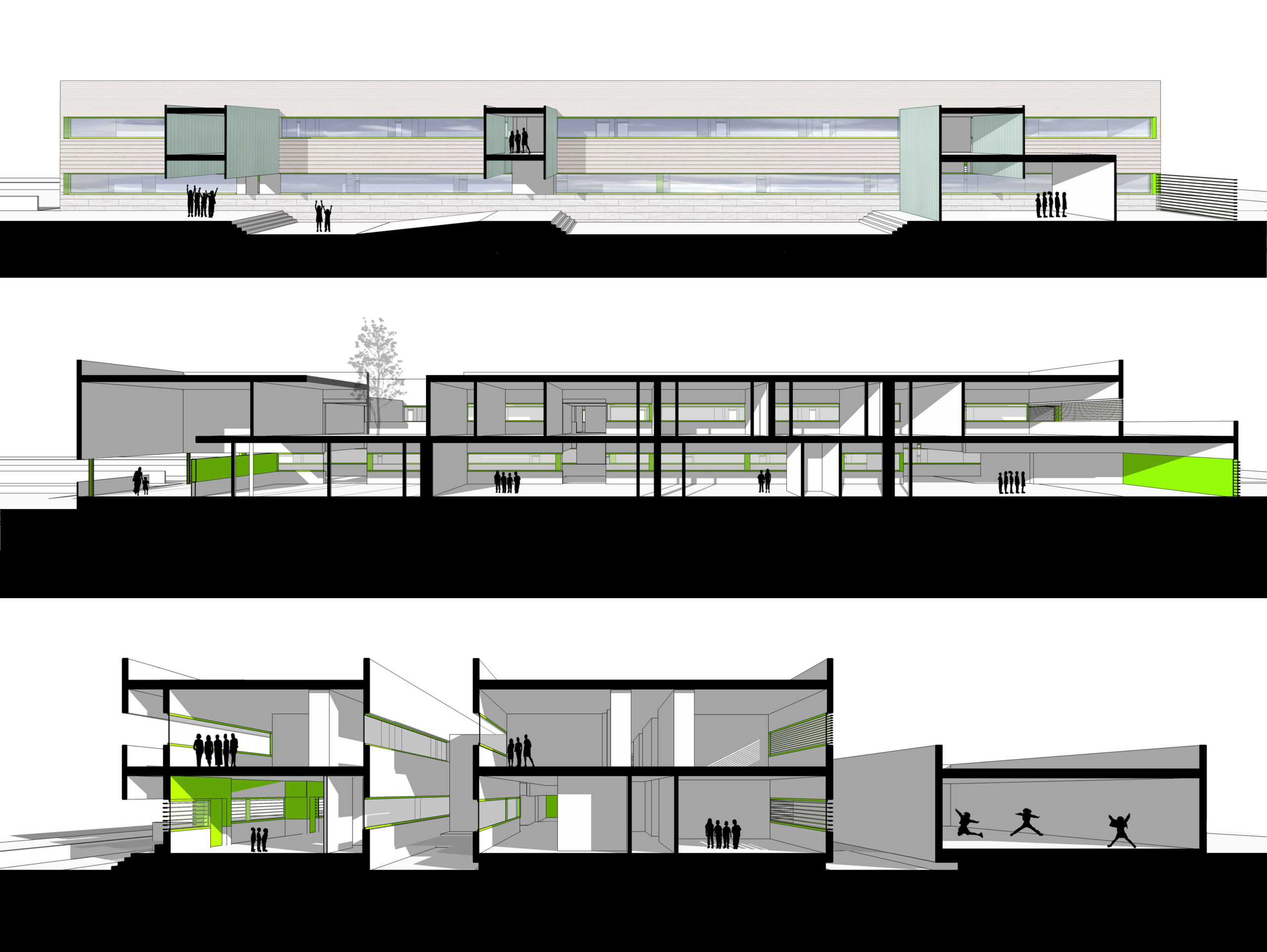
The building is conceived as two longitudinal volumes that define a clearly recognizable central entrance from the urban space. This operation creates a gradual transition between the city and the interior of the school, reinforced by the access ramp and a permeable enclosure that combines control with visual openness.
The organization is based on a highly legible linear scheme, structured around a main axis leading to the central distribution core. From this point, circulation routes extend toward the classrooms, arranged in parallel bands. The circulation is direct and uninterrupted, facilitating orientation and efficient control of the building.
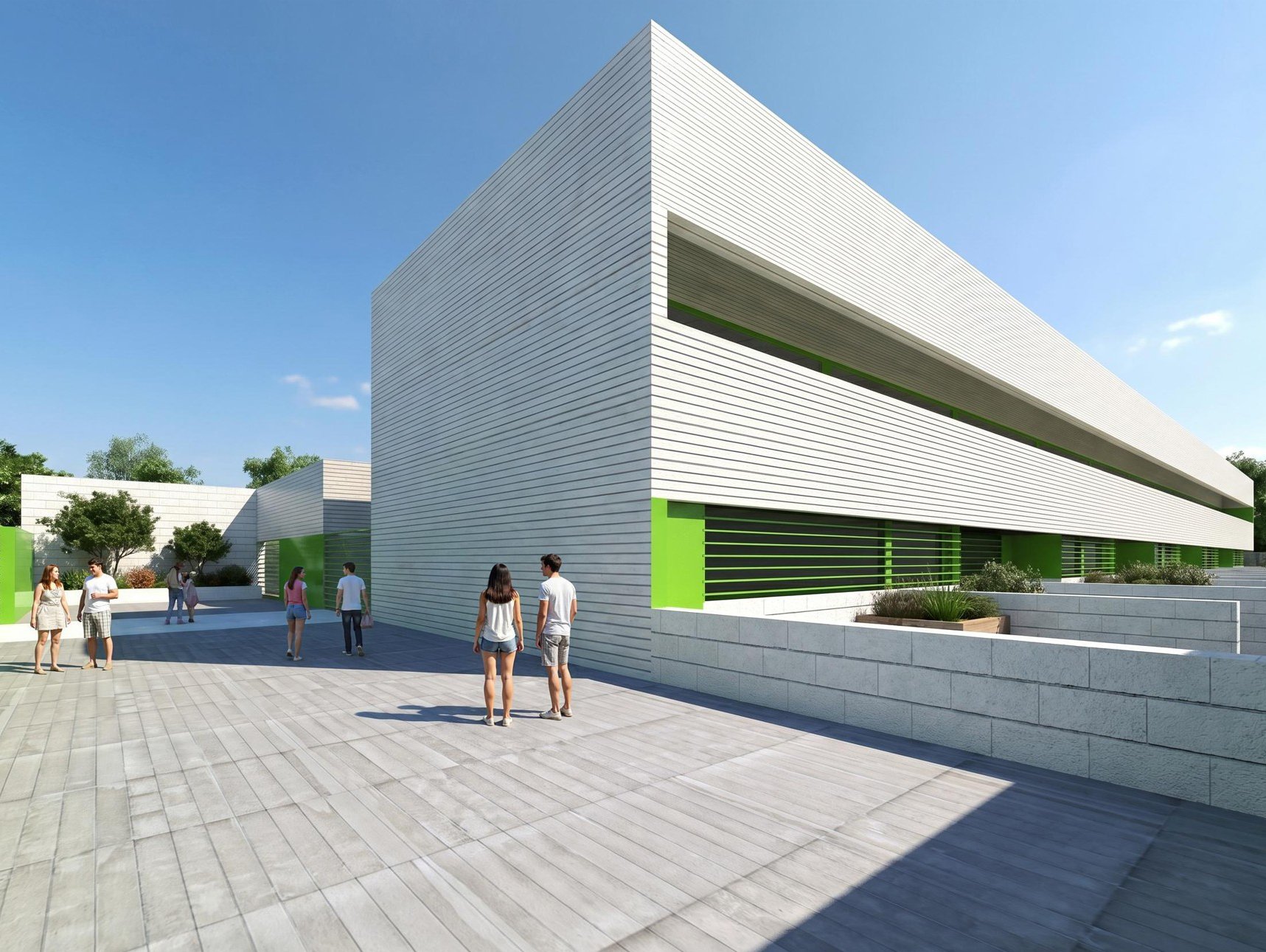
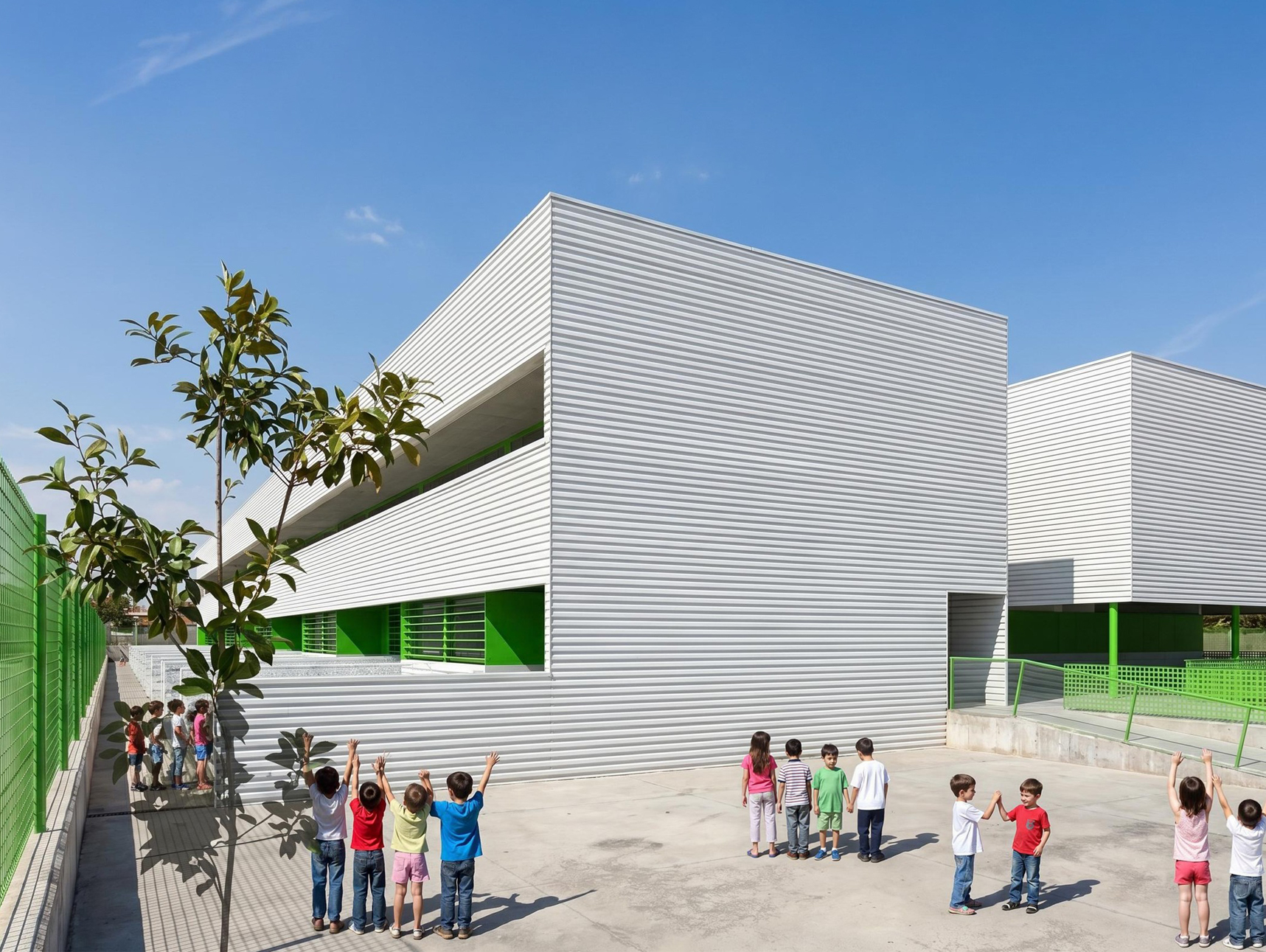
The classrooms are positioned along the façades to ensure homogeneous daylight and natural ventilation. Continuous horizontal openings allow controlled light penetration while preventing glare. The glazed central space acts as a source of illumination, bringing natural light deep into the interior of the complex.
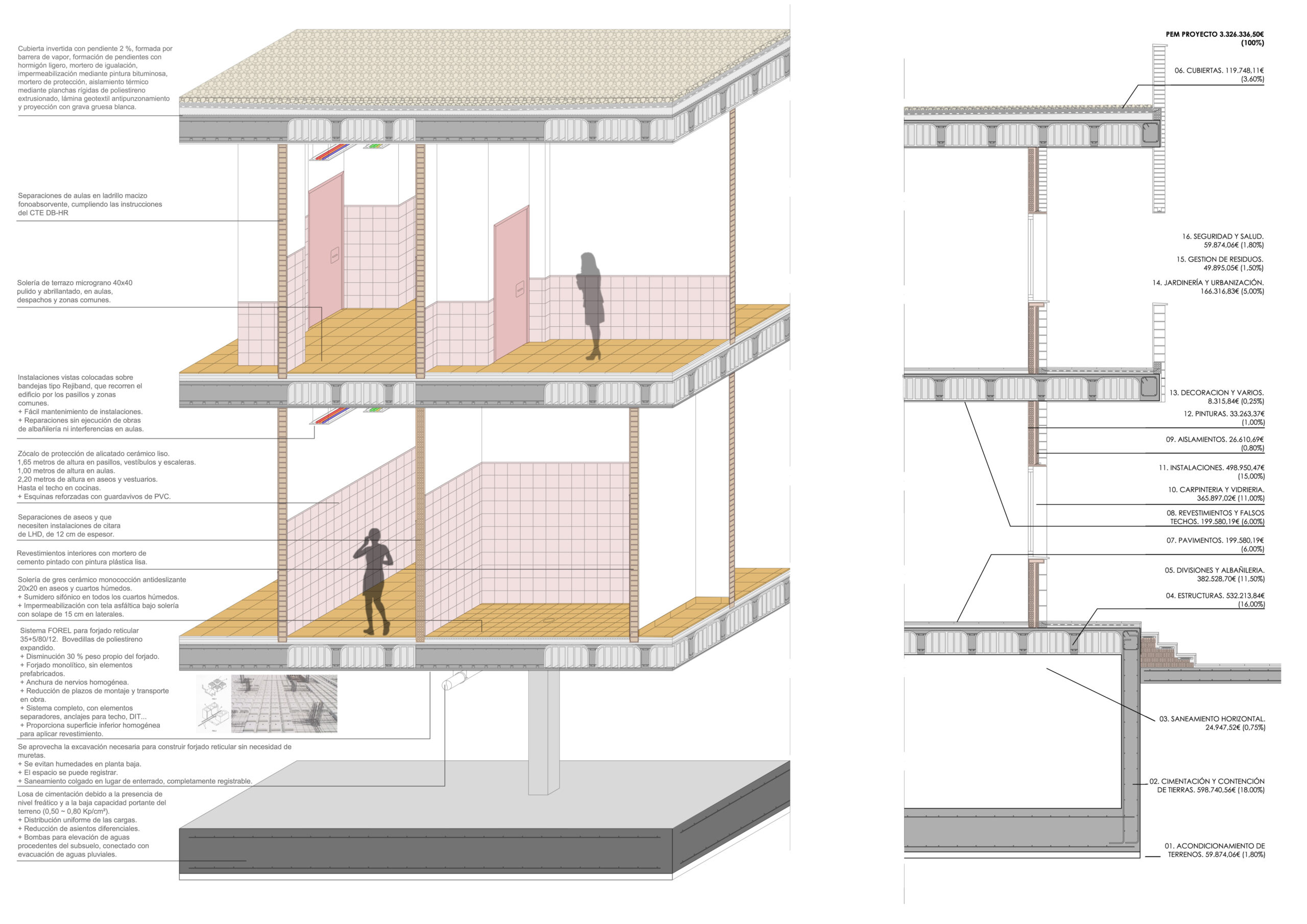
The envelope is resolved through a horizontal panel system that provides uniformity and precision. Elements in direct contact with users are differentiated through a colored plinth, introducing a more human scale. The constructive solution prioritizes industrialized, durable, and low-maintenance systems.
TECHNICAL DATA
- BUILDING: CEIP IN LAS SALINAS (2009)
- PROJECT ARCHITECT: JOSÉ ÁNGEL FERRER
- CLIENT: REGIONAL GOVERNMENT OF ANDALUSIA
- LOCATION: ROQUETAS DE MAR (ALMERÍA)
- BUILT AREA: 4.115 m2

