

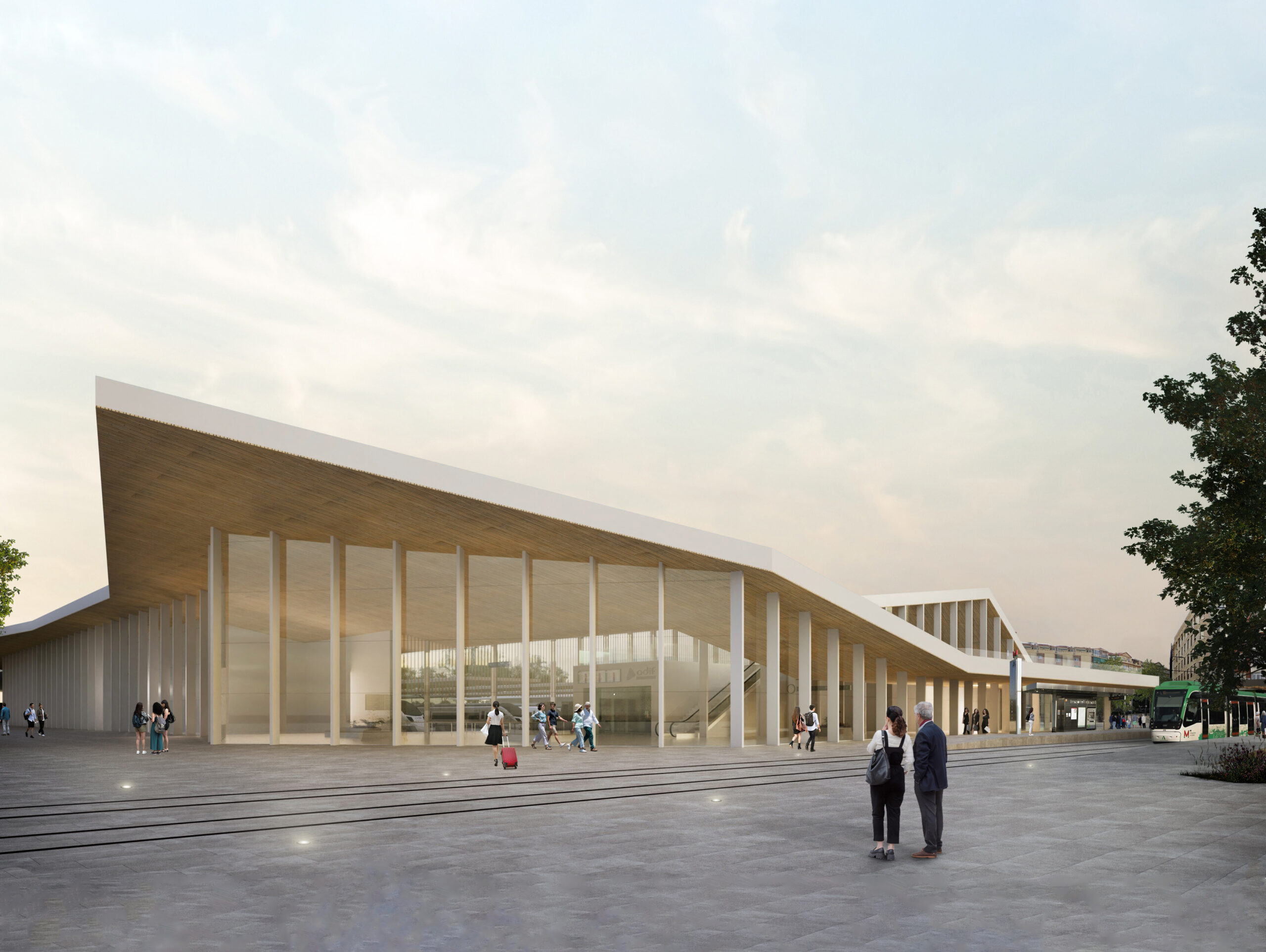
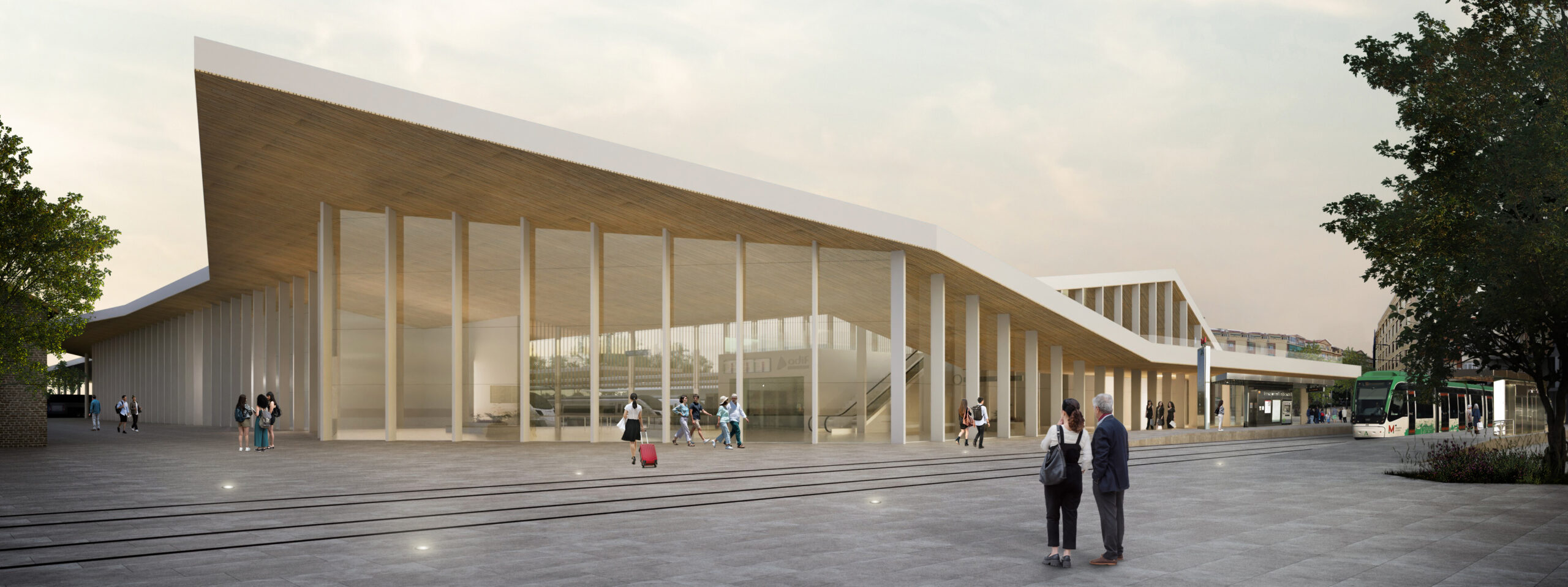
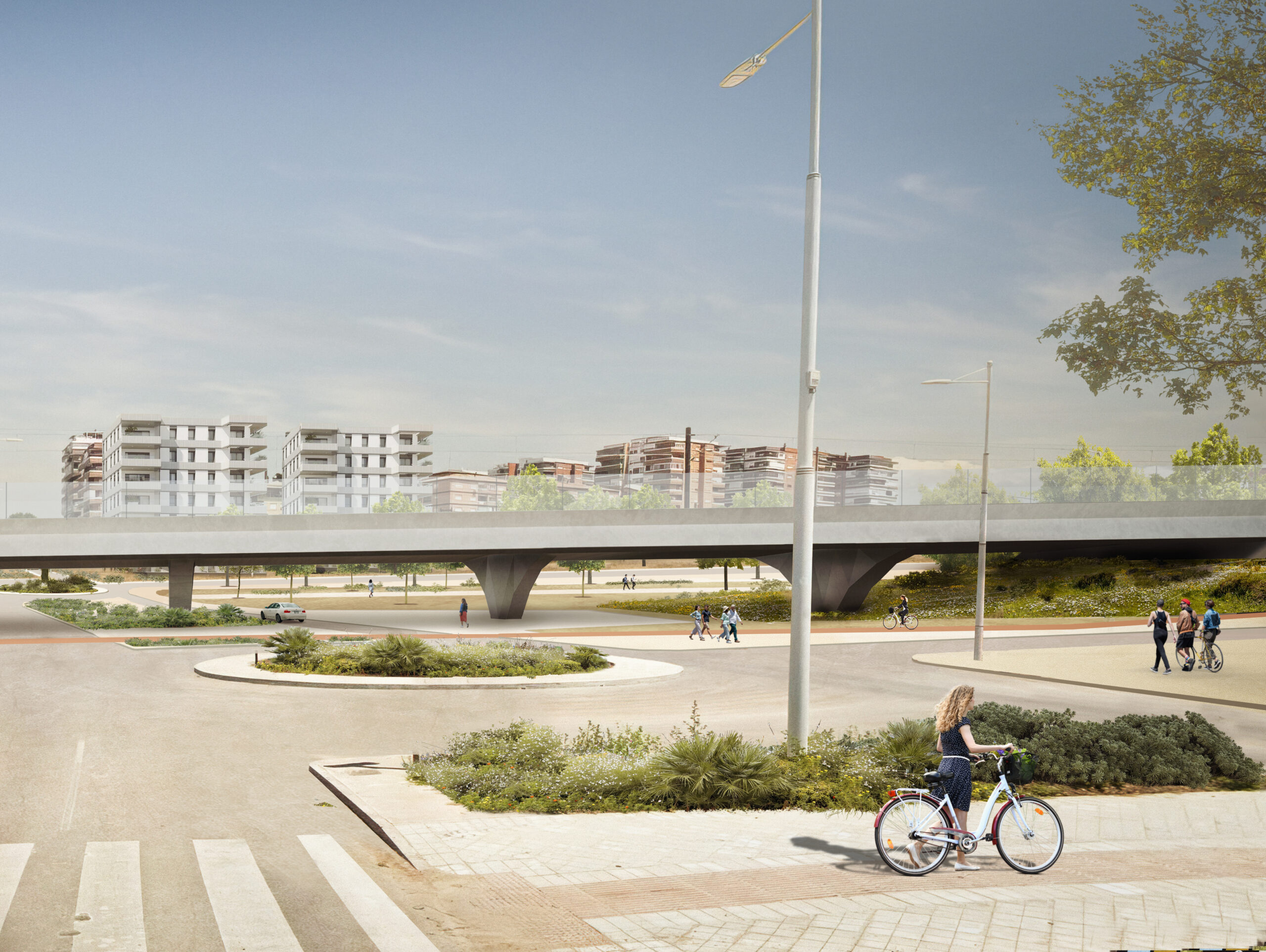
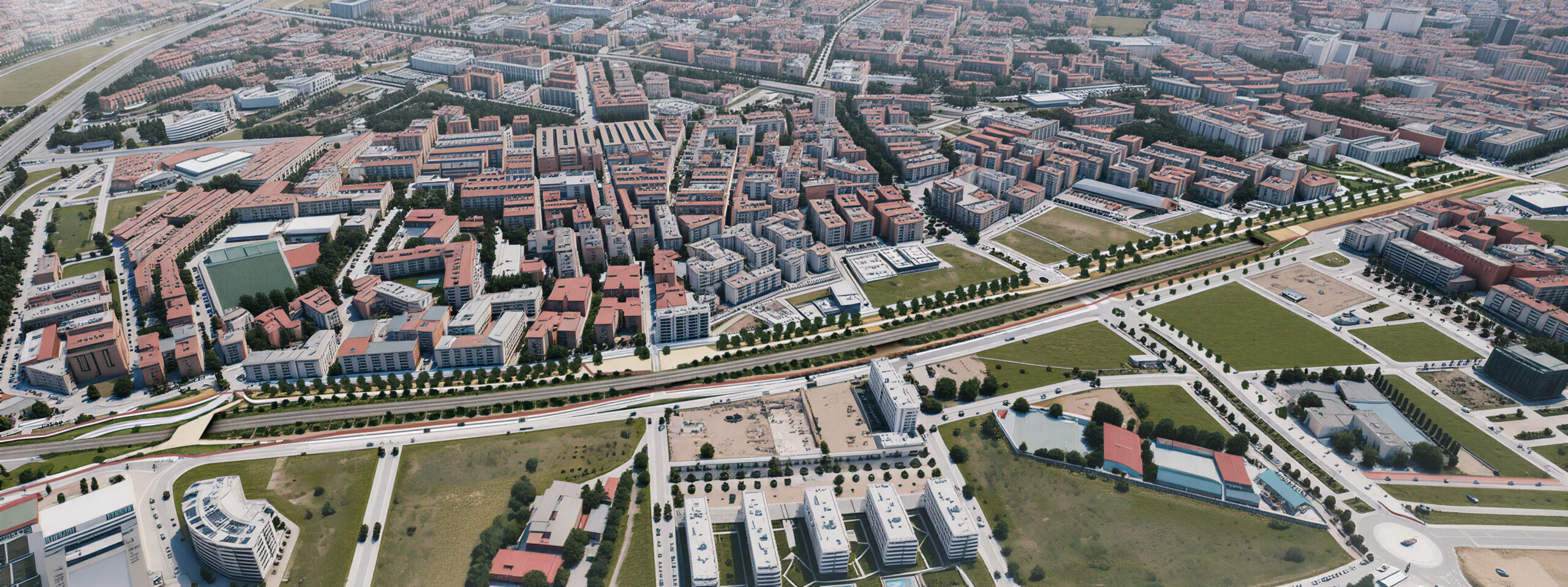
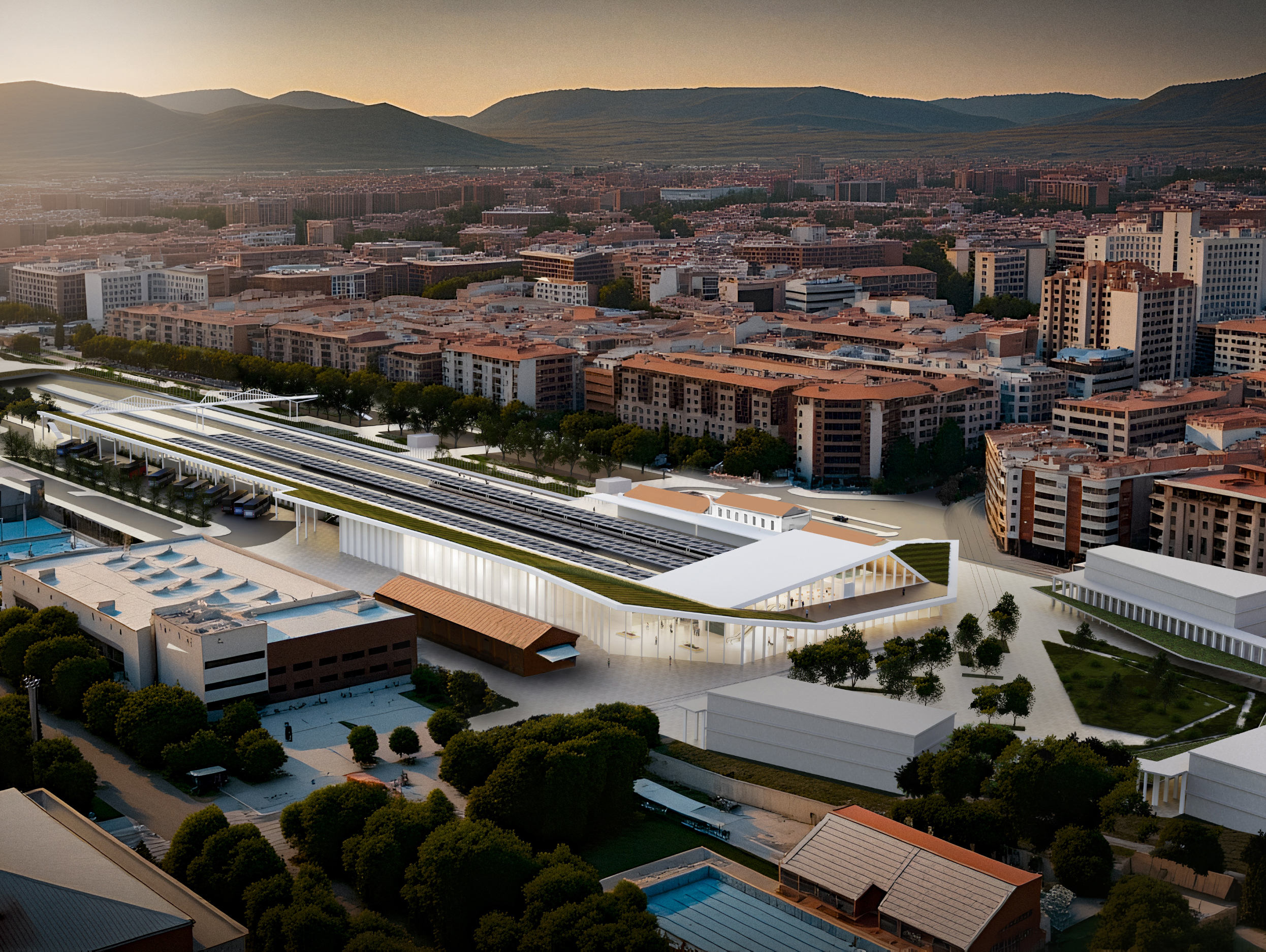
Porta Granada proposes the comprehensive transformation of Granada’s railway station into a new urban, intermodal, and landscape gateway. The project extends far beyond the passenger terminal itself, reinterpreting the railway infrastructure as a continuous urban system: a park-plaza, a station-belvedere, a Railway Memory Promenade, a linear boulevard, and a green corridor connecting to La Azucarera. The railway is no longer understood as a barrier but as a connective structure linking neighborhoods, the university campus, public transport networks, and metropolitan public space.
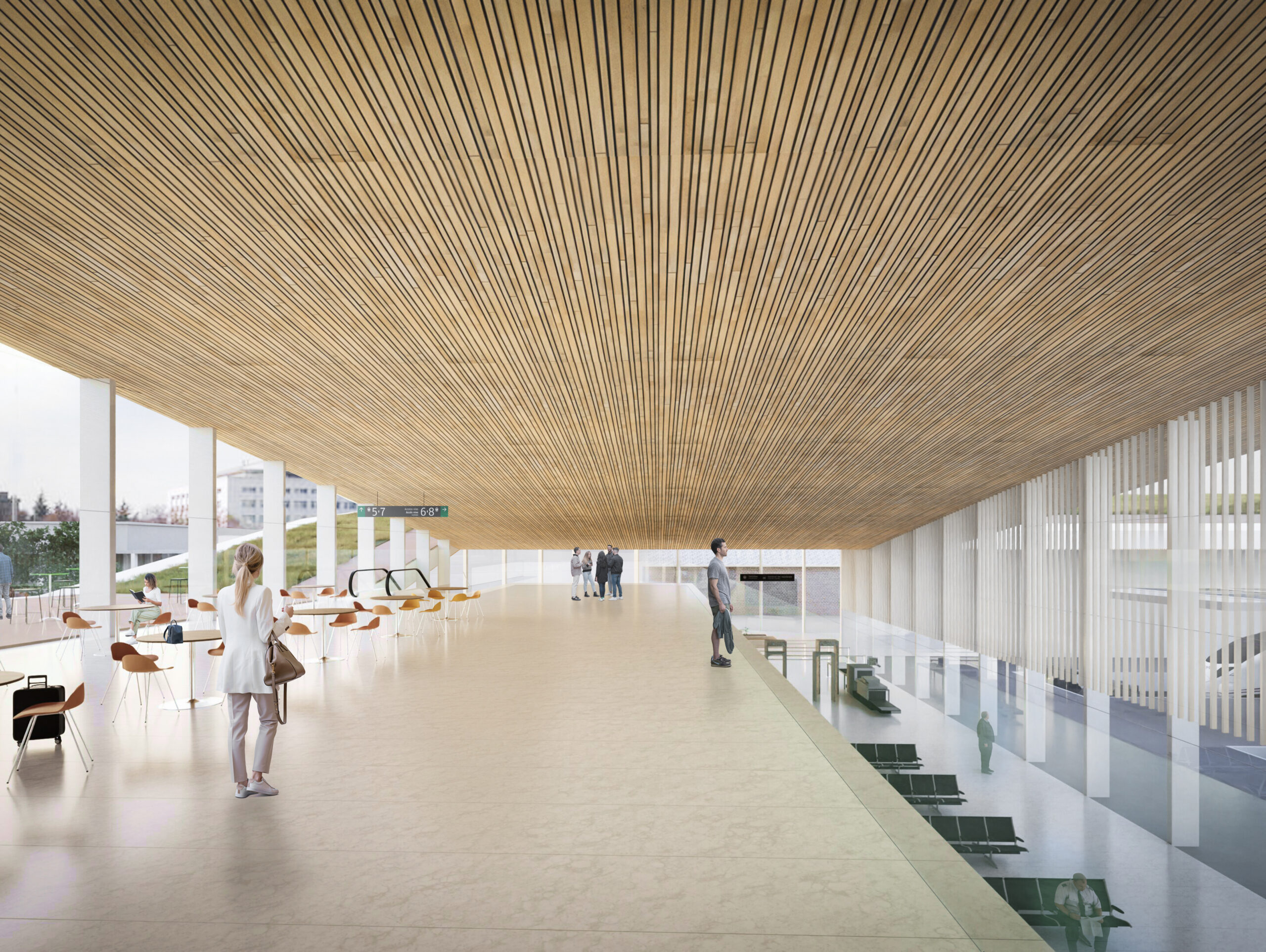
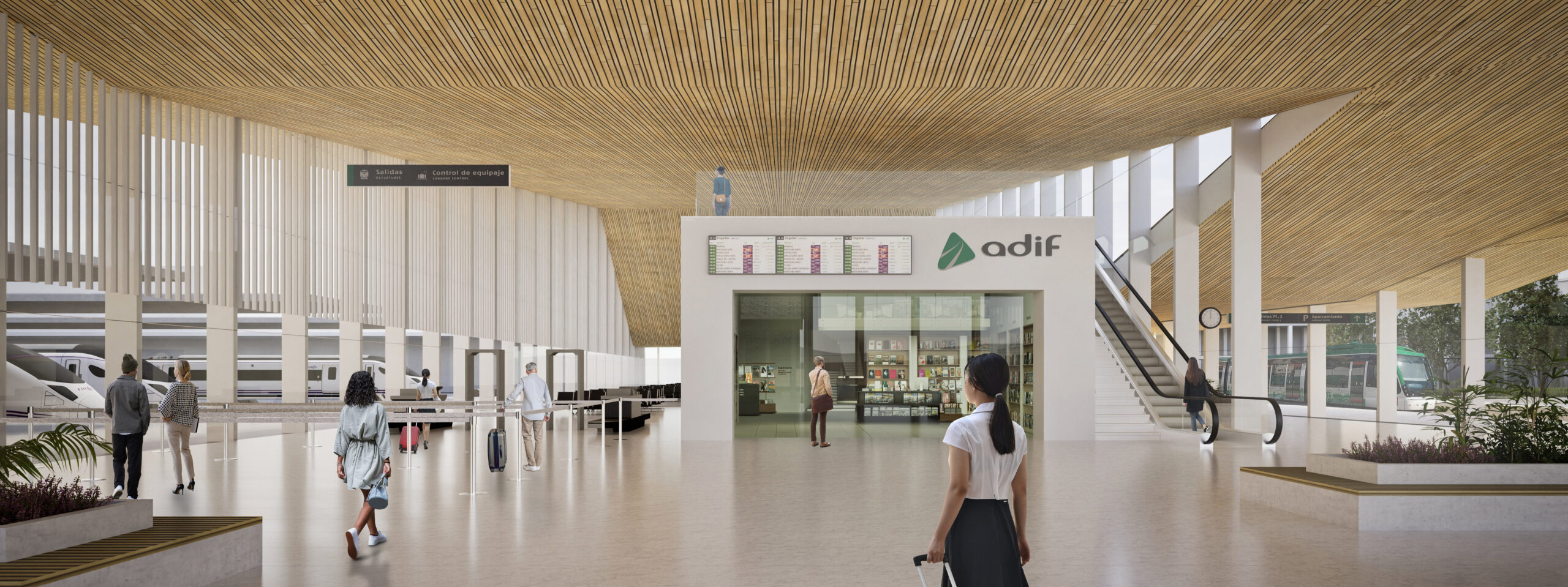
The new passenger terminal is conceived as the operational heart of the intervention. Its internal organization prioritizes clarity of movement, clearly separating departure and arrival flows while arranging security controls, services, commercial areas, and waiting spaces in easily identifiable locations. The main concourse is designed as a large, open, and legible hall where the passenger experience is structured through long visual perspectives, multiple access points, and a direct relationship with the public square, metro station, bus interchange, and railway platforms.
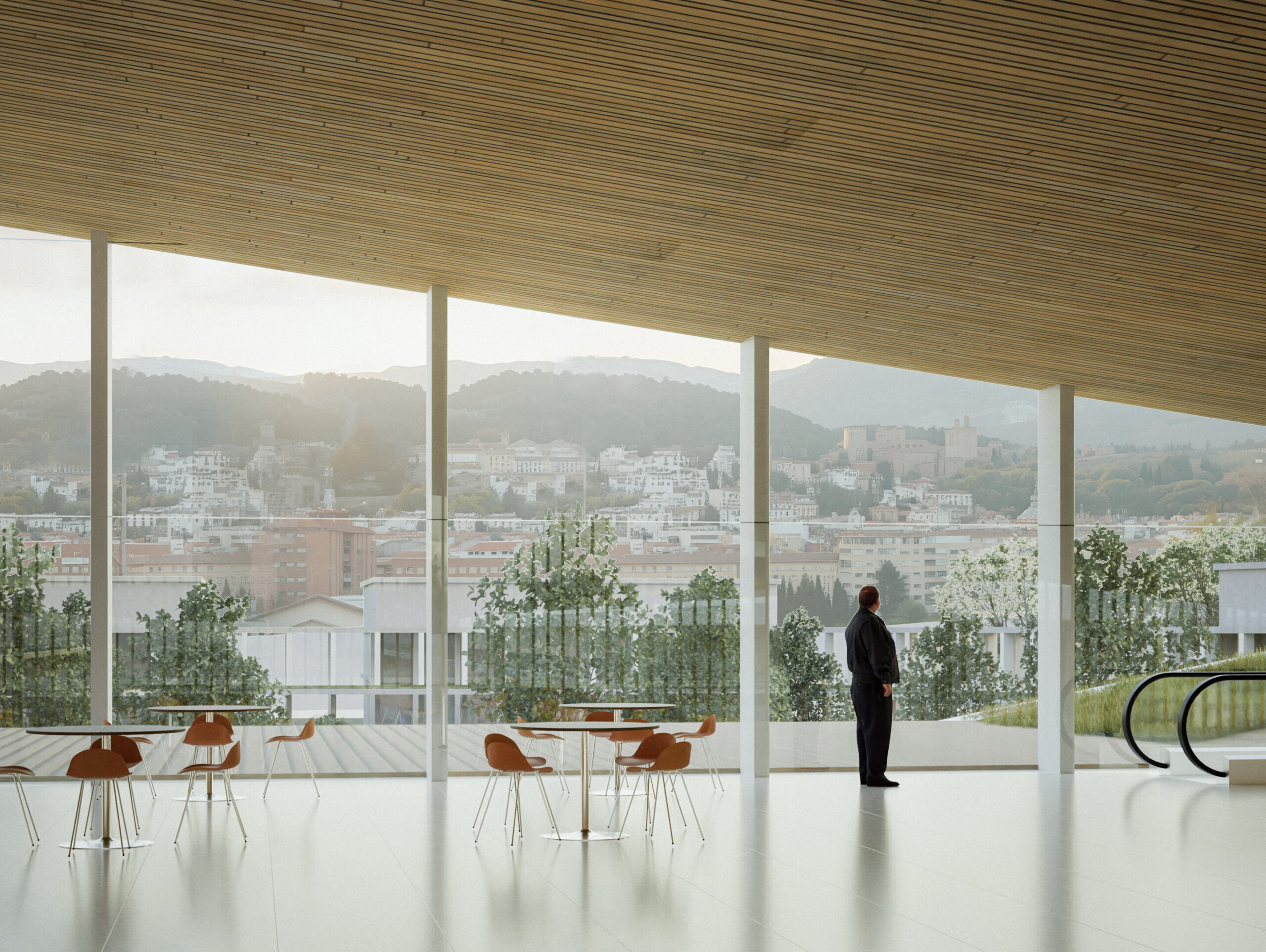
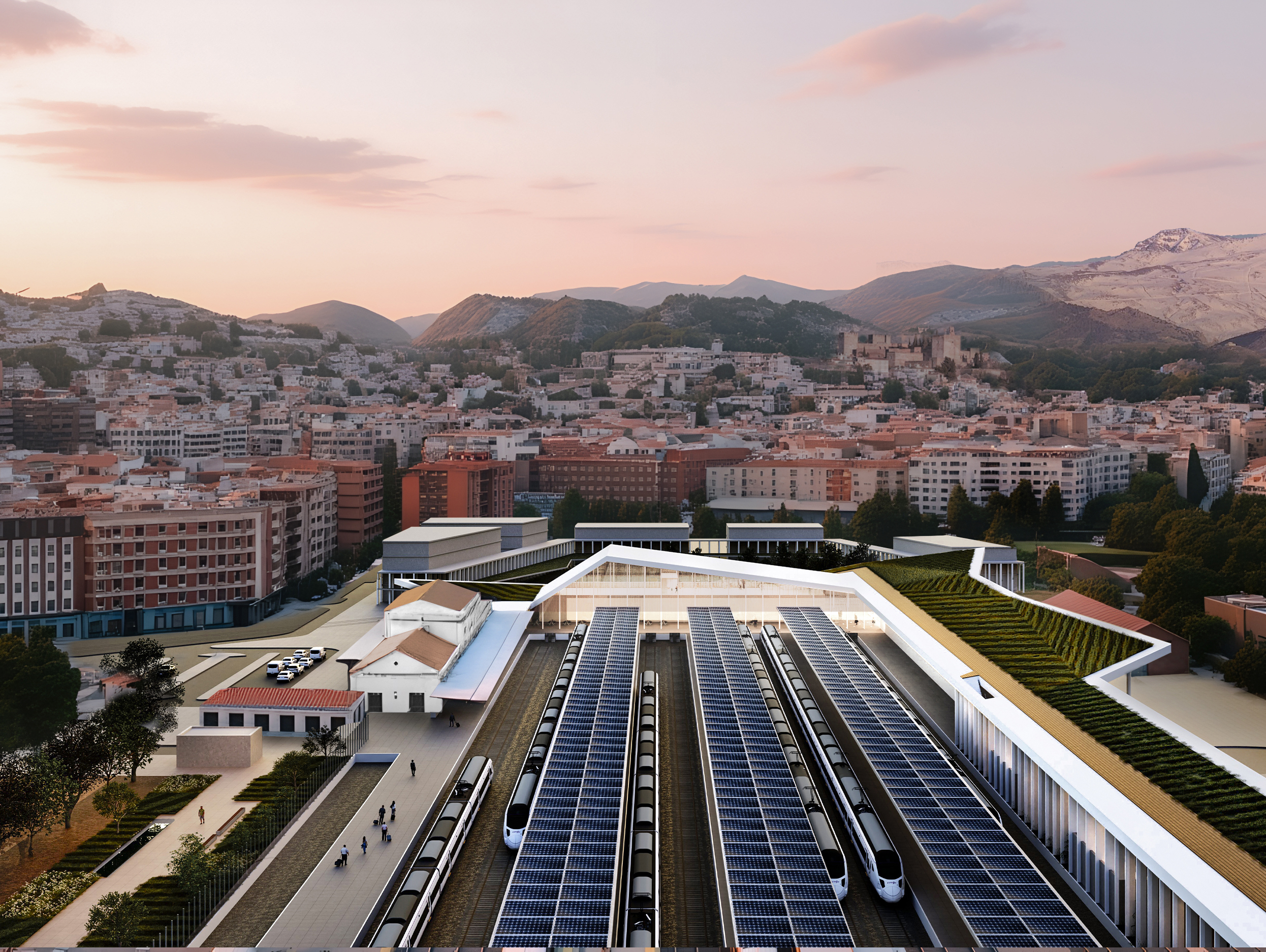
Natural light is one of the project’s defining architectural resources. The folded roof introduces controlled daylight into the interior, creating a bright environment while protecting users from excessive solar radiation through integrated louver systems. This roof functions not only as an enclosure but also as a climatic canopy, a fifth façade, and a new urban landmark. Its articulated profile engages in dialogue with the silhouette of the Sierra Nevada mountains and rises to accommodate a café-belvedere, a panoramic terrace, and rooftop circulation routes framing views of the city, the Alhambra, and the wider landscape of Granada.
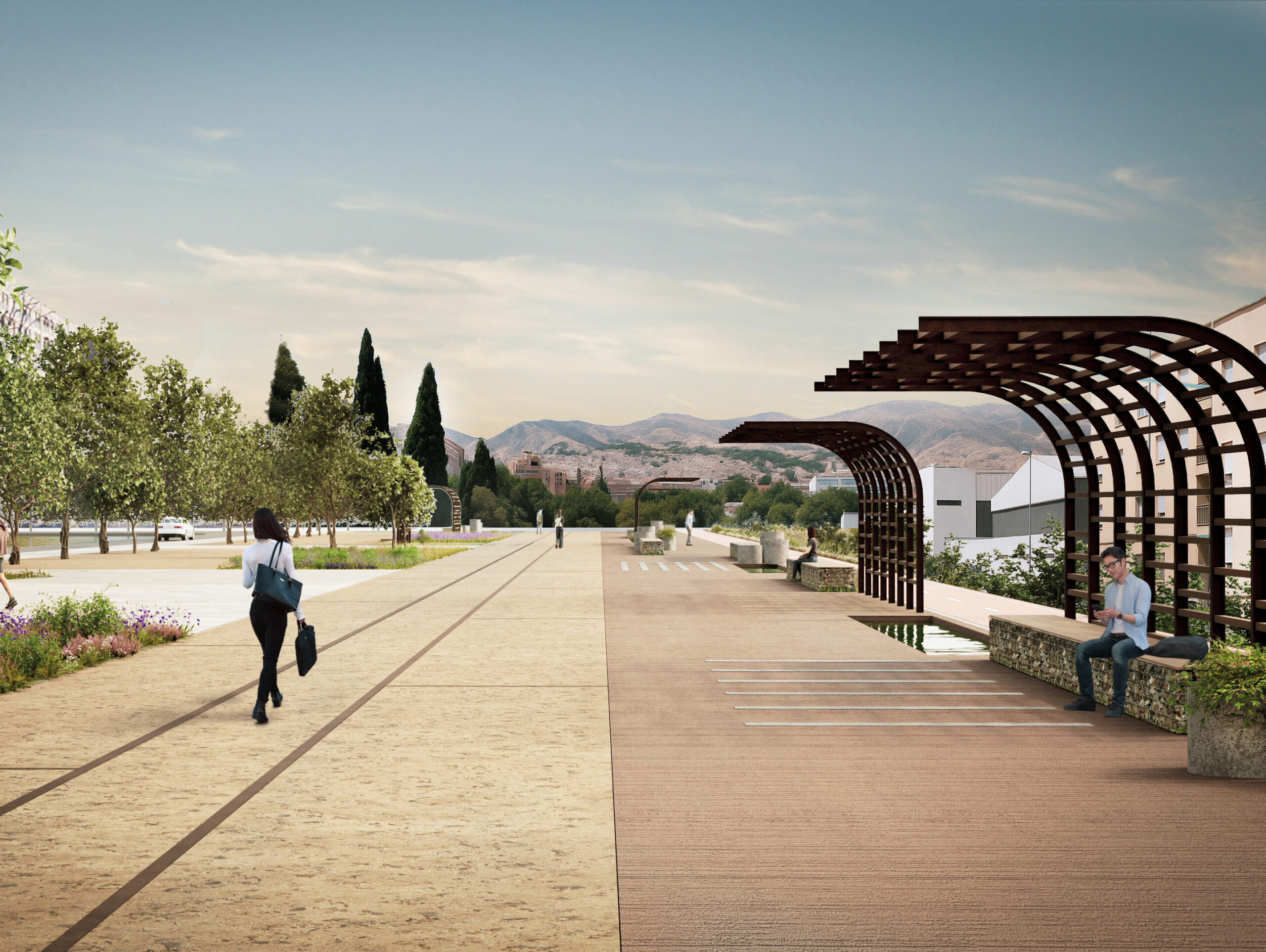
From a constructive perspective, the proposal is based on robust, maintainable, and adaptable solutions. High-resistance stone paving, solar-controlled glazed façades, accessible building systems, modular profiles, lightweight green roofs, photovoltaic pergolas over the platforms, and reused materials recovered from the railway infrastructure form part of the project’s material strategy. This constructive logic extends into the public realm, where rails, sleepers, ballast, and other railway elements are reincorporated as paving, urban furniture, pergolas, fountains, and pieces of material memory.
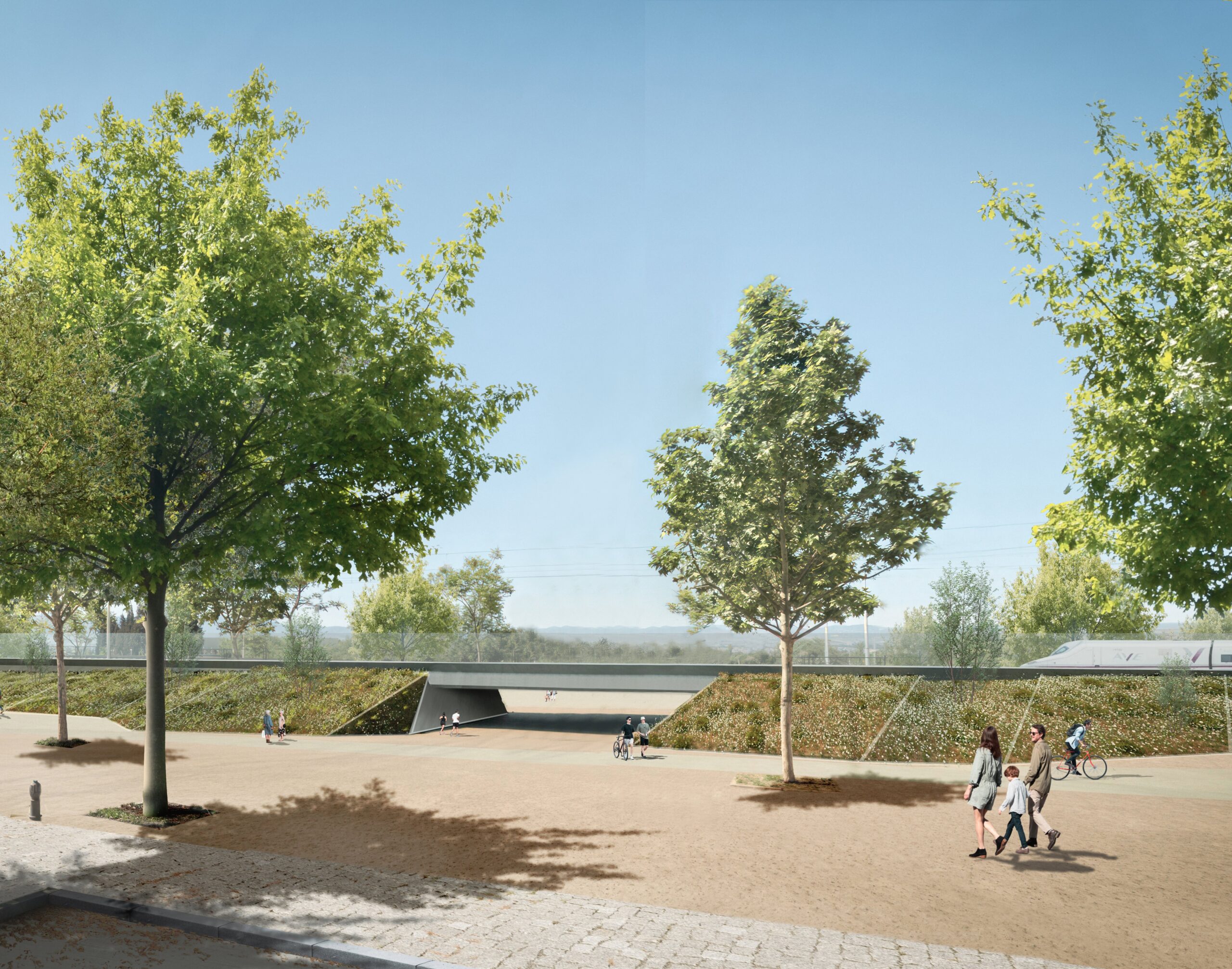
The urban context plays a decisive role in the proposal. The intervention reconnects neighborhoods historically separated by the railway corridor, particularly La Chana, La Rosaleda, Pajaritos, and the university district of Fuentenueva. An elevated pedestrian bridge, new viaducts, a park-covered underground car park, a bus interchange, and dedicated cycling routes significantly enhance pedestrian, vehicular, and active mobility connections. The project therefore creates a new urban sequence in which the station, park, interchange, and surrounding neighborhoods become part of a unified spatial experience.
The Railway Memory Promenade and the Railway Boulevard consolidate the landscape dimension of the intervention. Through vegetated embankments, shade trees, permeable pavements, leisure areas, cycle paths, viewpoints, and play spaces, the railway infrastructure is transformed into a climatic and social corridor. Existing vegetation is preserved and integrated into the design, reinforcing environmental continuity while mitigating the visual and acoustic impact of the railway tracks. The station thus becomes not only a mobility hub but also a new civic landmark for Granada.
Overall, Porta Granada proposes a contemporary station that is clear in its circulation, generous in natural light, precise in its construction, and deeply connected to its urban and landscape context. The intervention transforms the railway arrival experience into a civic experience: a gateway to the city, a belvedere overlooking its landscape, and an infrastructure capable of reconciling memory, mobility, and public space.
TECHNICAL DATA
- BUILDING: GRANADA HIGH-SPEED RAIL STATION AND SURROUNDING URBAN REDEVELOPMENT (2025)
- PROJECT ARCHITECT: JOSÉ ÁNGEL FERRER
- CLIENT: ADIF
- LOCATION: GRANADA (GRANADA)
- GROSS FLOOR AREA: STATION BUILDING – 5.000 m² / PUBLIC REALM & URBAN REDEVELOPMENT – 79.000 m²

