

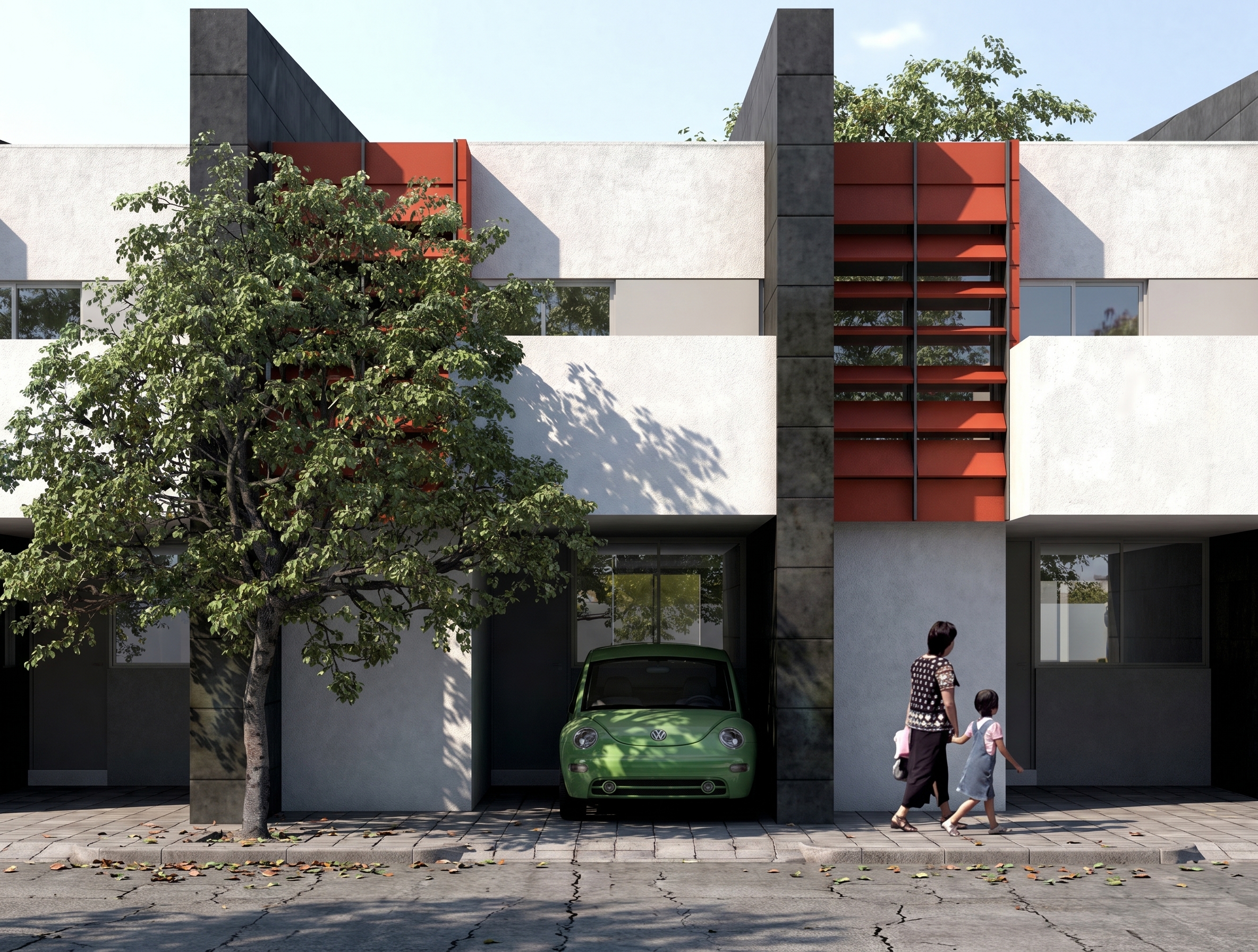
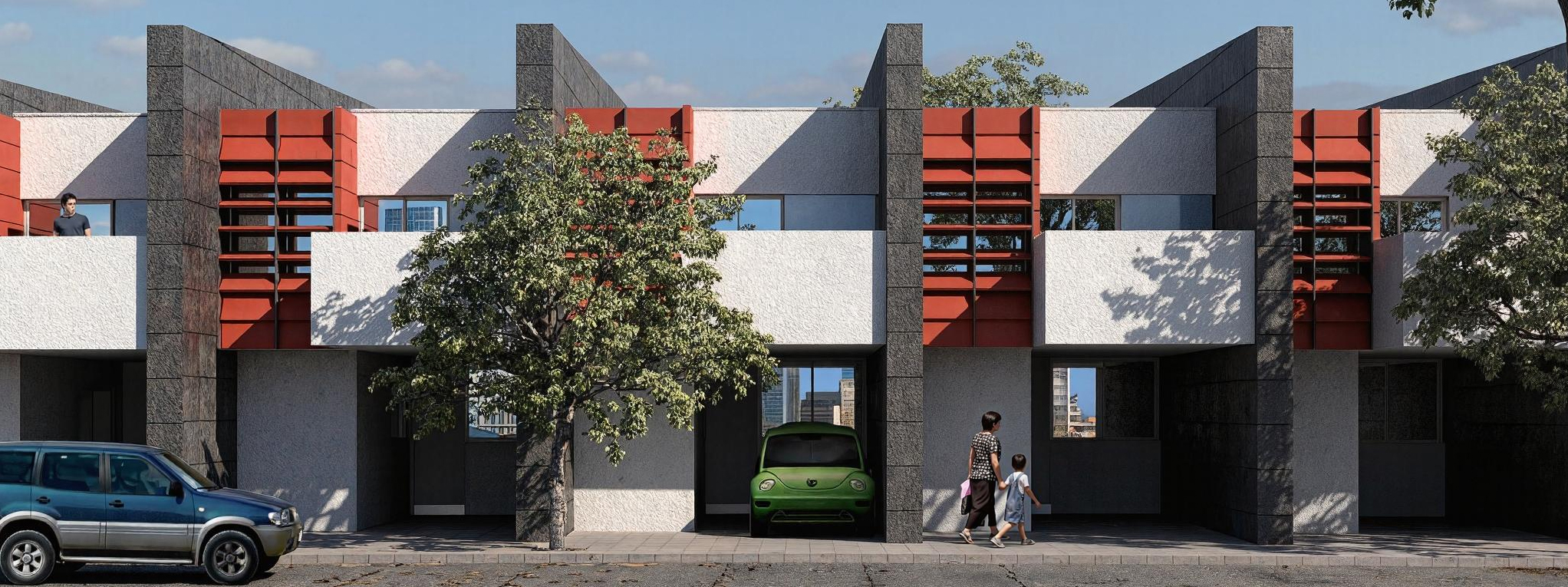
The project is organized as a sequence of independent single-family dwellings inserted between large walls acting as structural ribs. These vertical planes modulate the ensemble, absorb the site’s topography, and ensure privacy between dwellings, while locating the adapted units for people with reduced mobility and large families at the ends of the complex.
The layout responds to the urban structure of the surrounding environment. Although the main streets run along a north–south direction, access points are shifted toward secondary streets, fostering a more domestic relationship with the city and a north–south orientation slightly rotated toward the east. This arrangement improves solar exposure, organizes circulation routes, and allows the integration of one parking space within each plot.
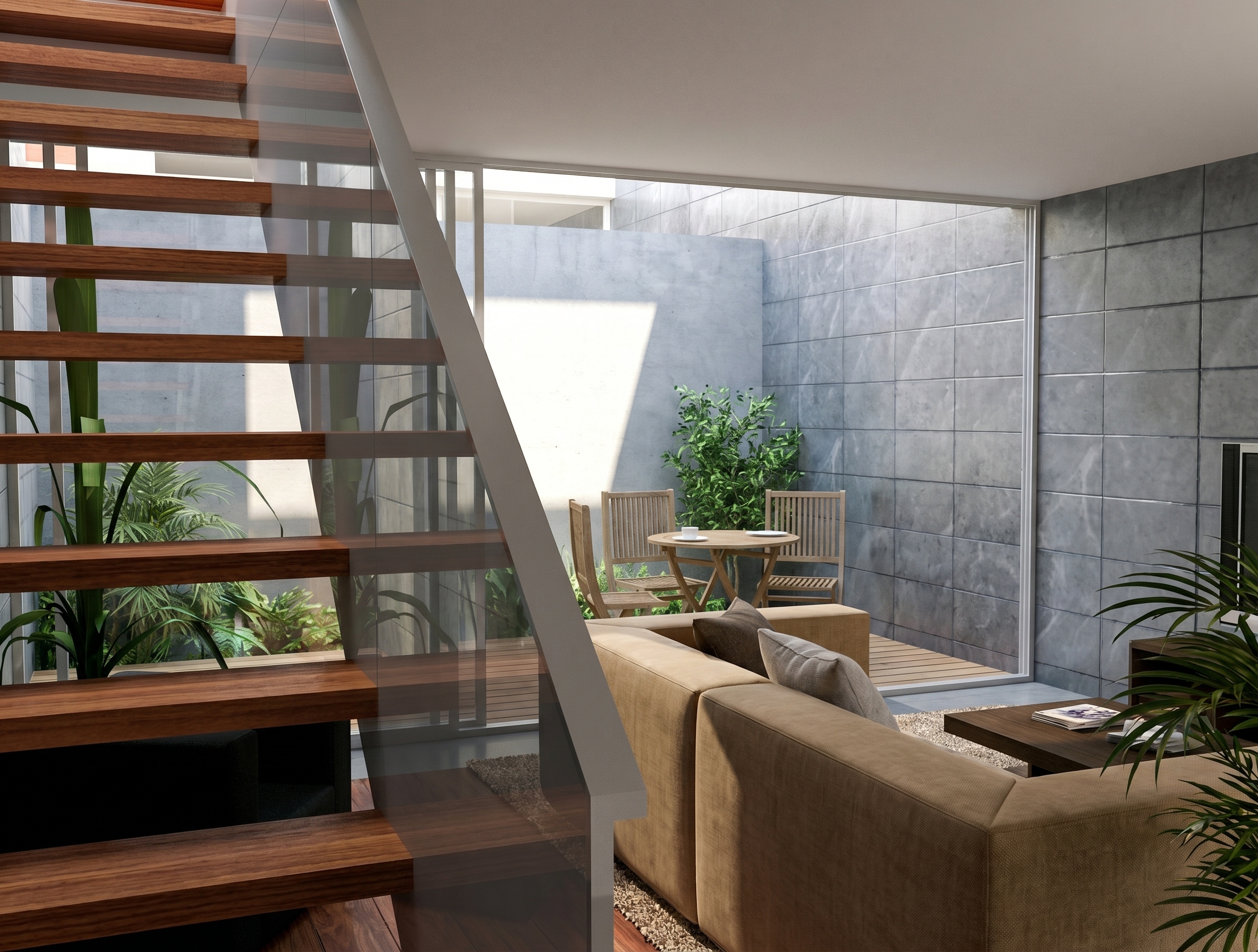
The dwelling is conceived from a flexible logic adapted to contemporary ways of living. Rather than following the conventional three-bedroom scheme, the proposal introduces two principal bedrooms and a third room capable of functioning as a bedroom, study, or workspace. The living room extends toward the rear patio through large sliding openings, allowing the exterior space to become an integral extension of the interior domestic environment.
Natural light and climatic control define the architectural solution. The dwellings receive morning light through the most favorable orientations, while the lateral walls protect against afternoon sun and prevent direct overlooking between units. In the most exposed areas, a ceramic double-skin system filters solar radiation, generates shade, and promotes natural ventilation.
The construction relies on a sober material palette closely linked to the local context. White stucco and ceramic elements reinterpret traditional regional solutions, while slate walls reinforce the structuring character of the ensemble. The result is a clear, compact, and climatically responsive residential architecture, where courtyards, porches, circulation routes, and building envelopes establish a balanced relationship between privacy, light, use, and the city.
TECHNICAL DATA
- BUILDING: 56 SOCIAL HOUSING UNITS FOR YOUNG PEOPLE (2008)
- PROJECT ARCHITECT: JOSÉ ÁNGEL FERRER
- CLIENT: REGIONAL GOVERNMENT OF ANDALUSIA
- LOCATION: CERRO MURIANO (CÓRDOBA)
- GROSS FLOOR AREA: 5.906 m²

