

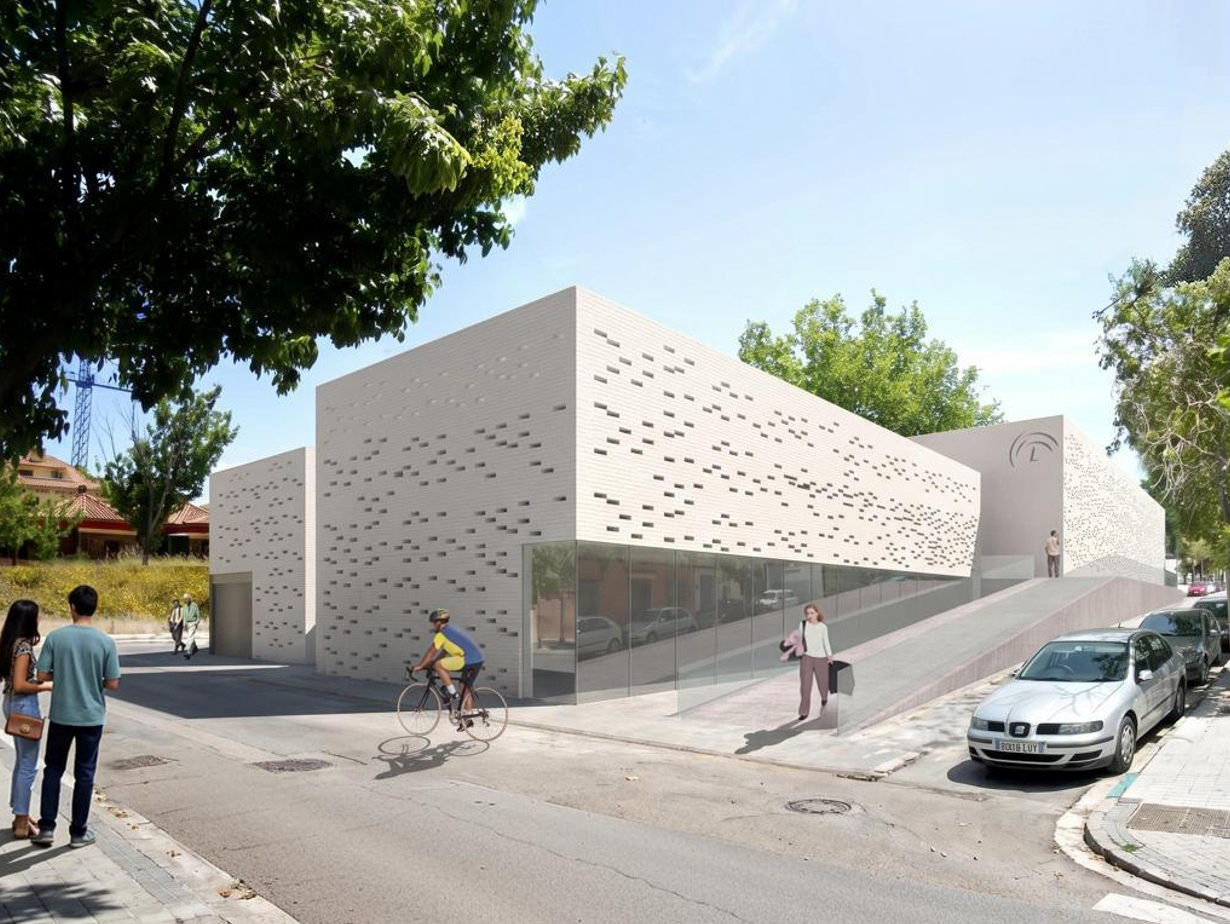
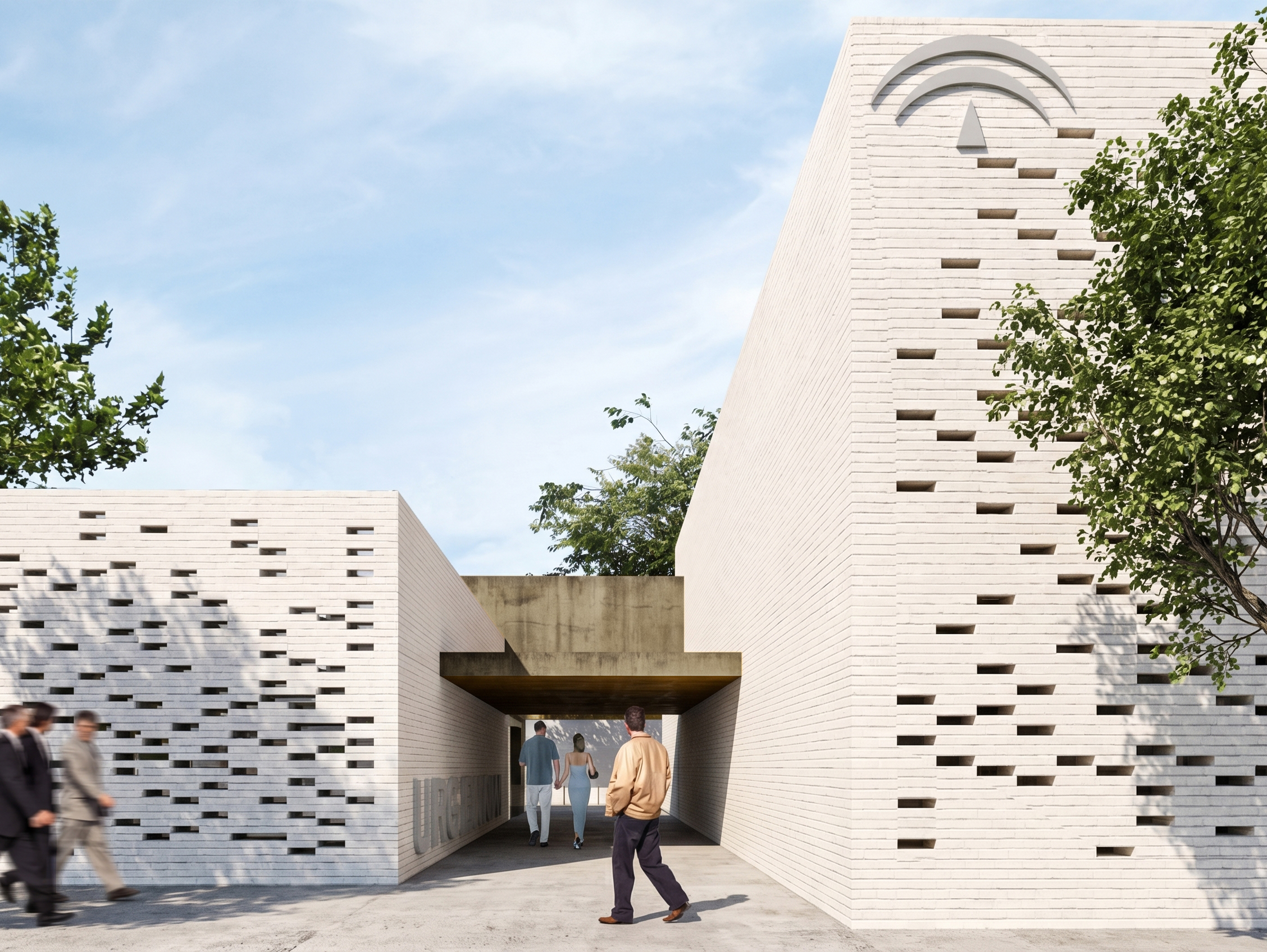
The building is conceived as a compact volume that consolidates the urban corner, resolved through a clear geometry and a continuous envelope that gives it an institutional presence. The perforated skin introduces scale and rhythm, establishing a controlled relationship with its surroundings.
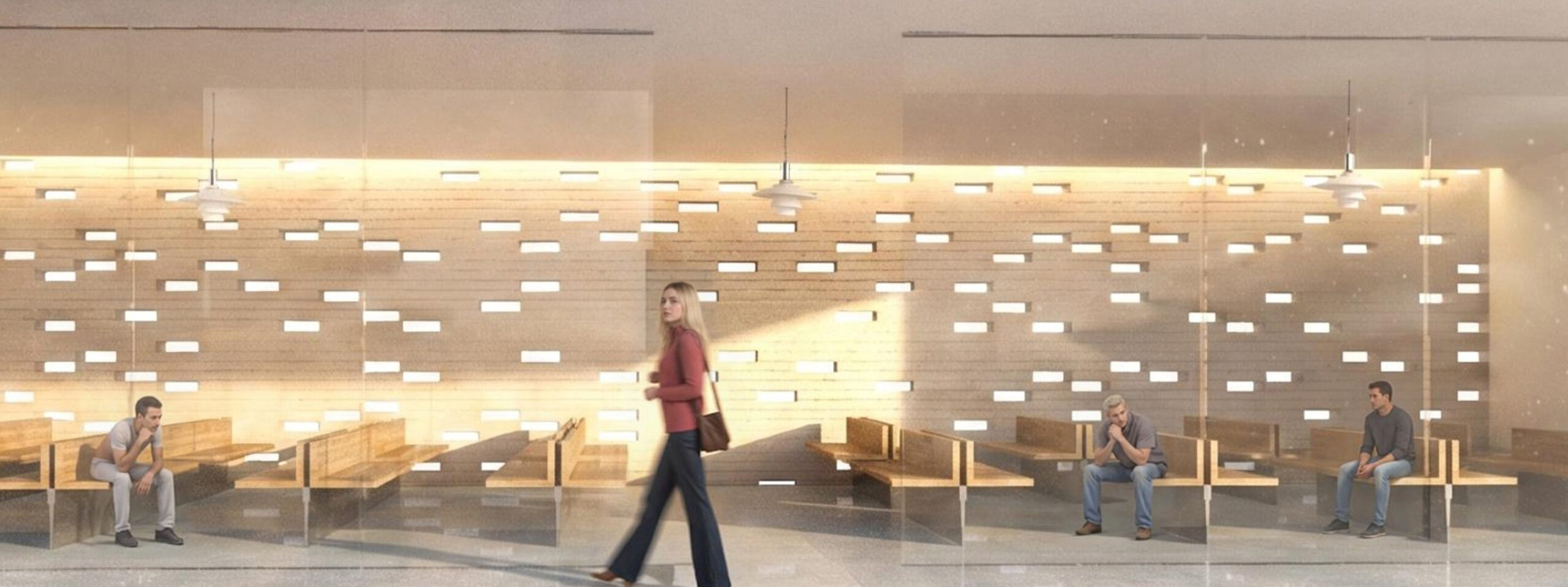
The ceramic façade operates as a passive daylight control system, filtering solar radiation and generating a soft, diffused natural light within the interior. Light becomes a key element of the project, providing uniformity and environmental comfort.
Access is defined through a setback that creates a transitional threshold between the public space and the interior. From this point, the building is organised through sequential routes, where compression and expansion structure the spatial experience.
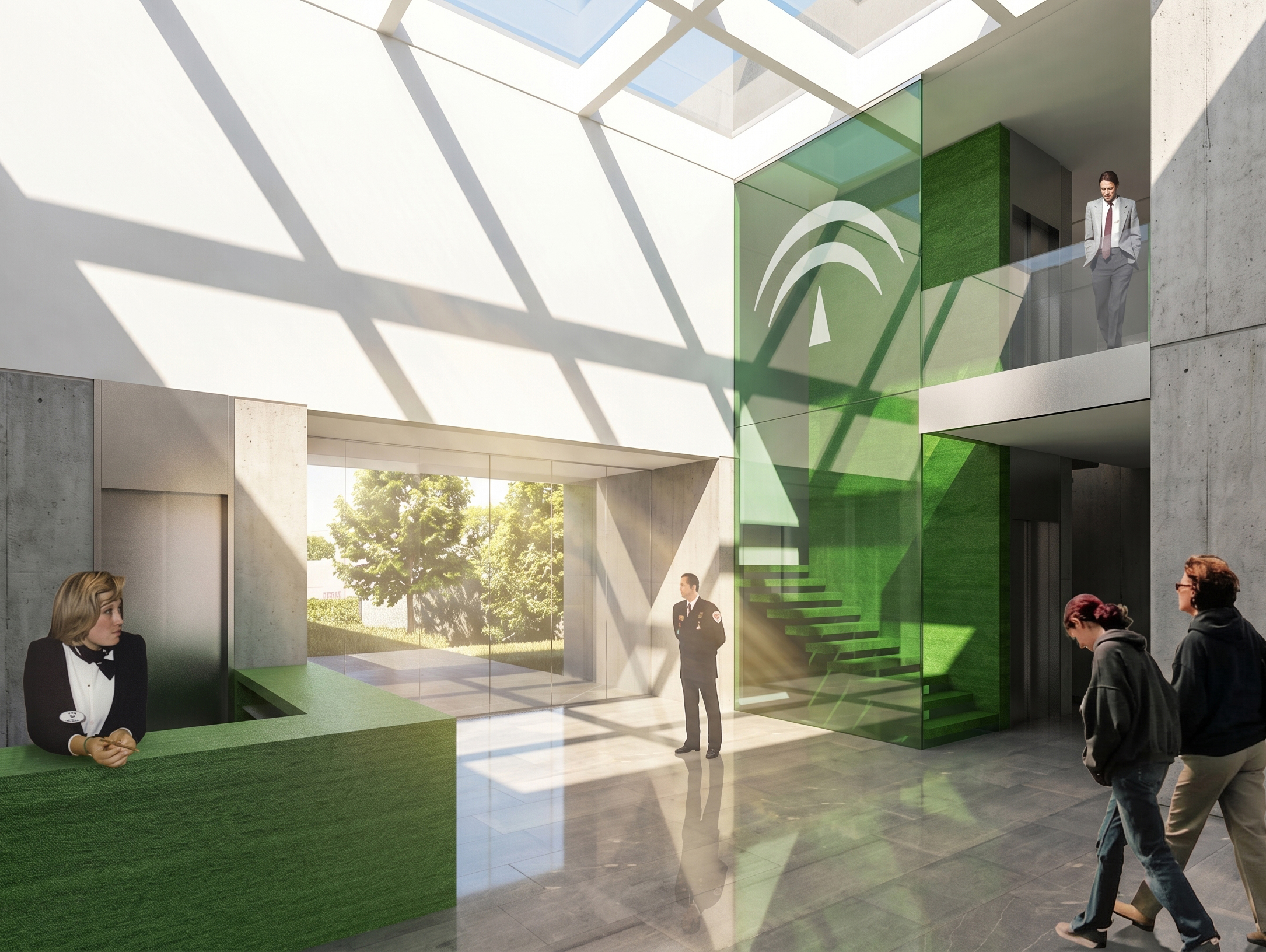
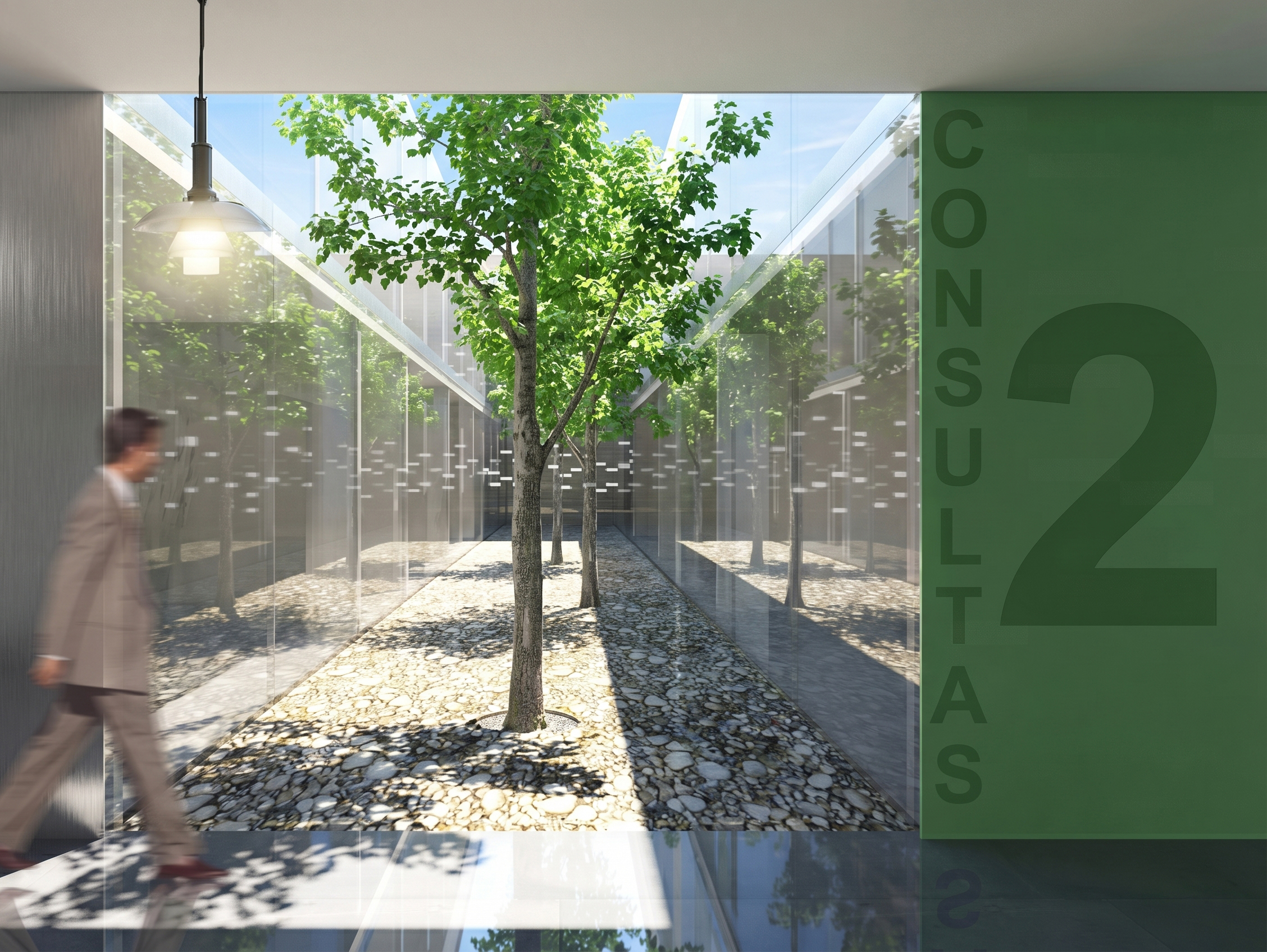
Inside, courtyards act as organising elements, introducing natural light and vegetation into the deeper areas. Circulation is arranged around these voids, creating clear, legible spaces that maintain a strong connection with the exterior.
From a constructive standpoint, the building is resolved using sober and durable systems, combining perforated ceramic masonry with large glazed surfaces at ground floor level. The materiality reinforces the coherence between architectural expression, environmental efficiency and maintenance.
TECHNICAL DATA
- BUILDING: HEALTH CENTRE (2008)
- PROJECT ARCHITECT: JOSÉ ÁNGEL FERRER
- CLIENT: REGIONAL GOVERNMENT OF ANDALUSIA
- LOCATION: SAN PEDRO DE ALCÁNTARA, MARBELLA (MÁLAGA)
- GROSS FLOOR AREA: 3.441 m²

