

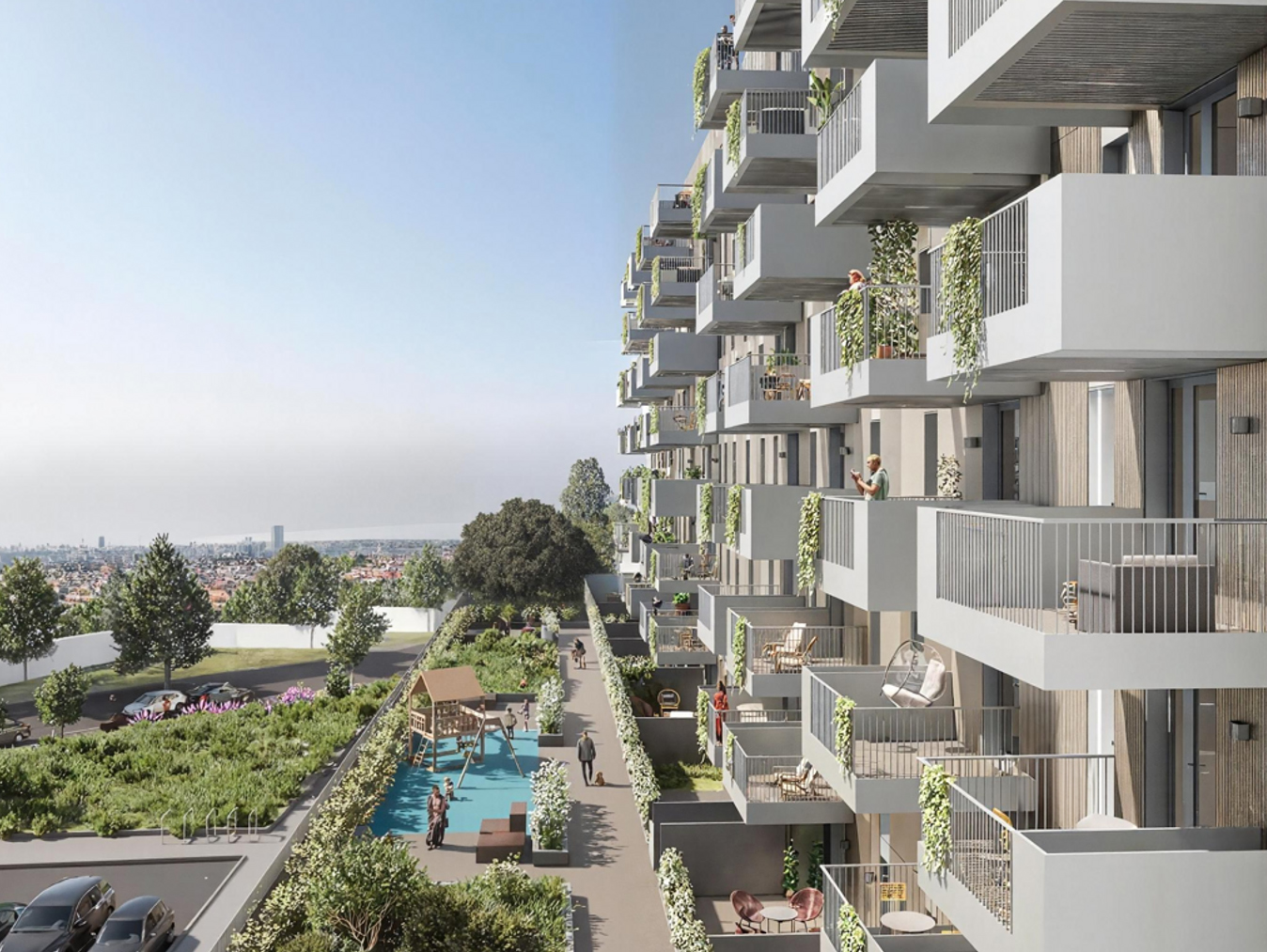
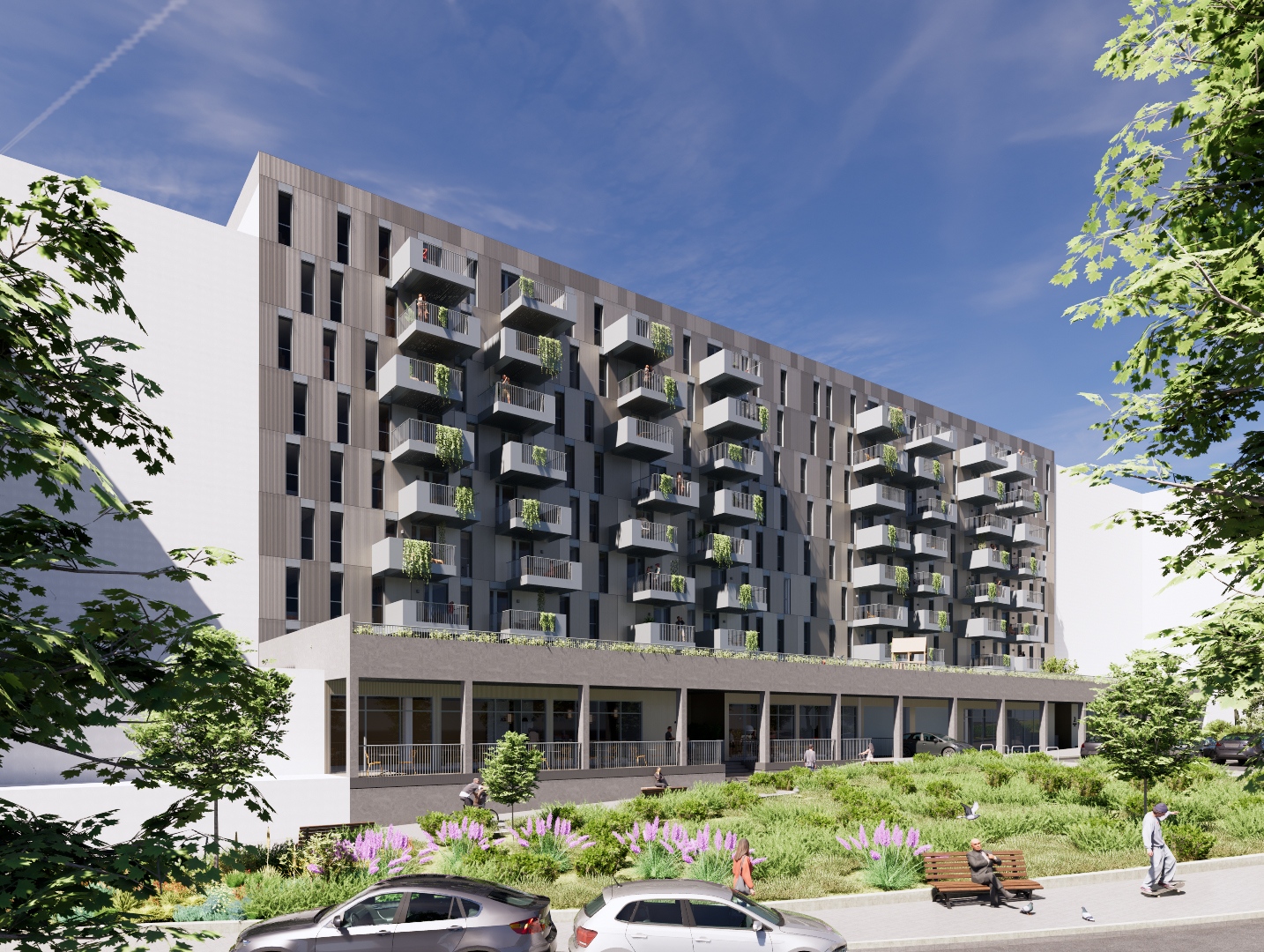
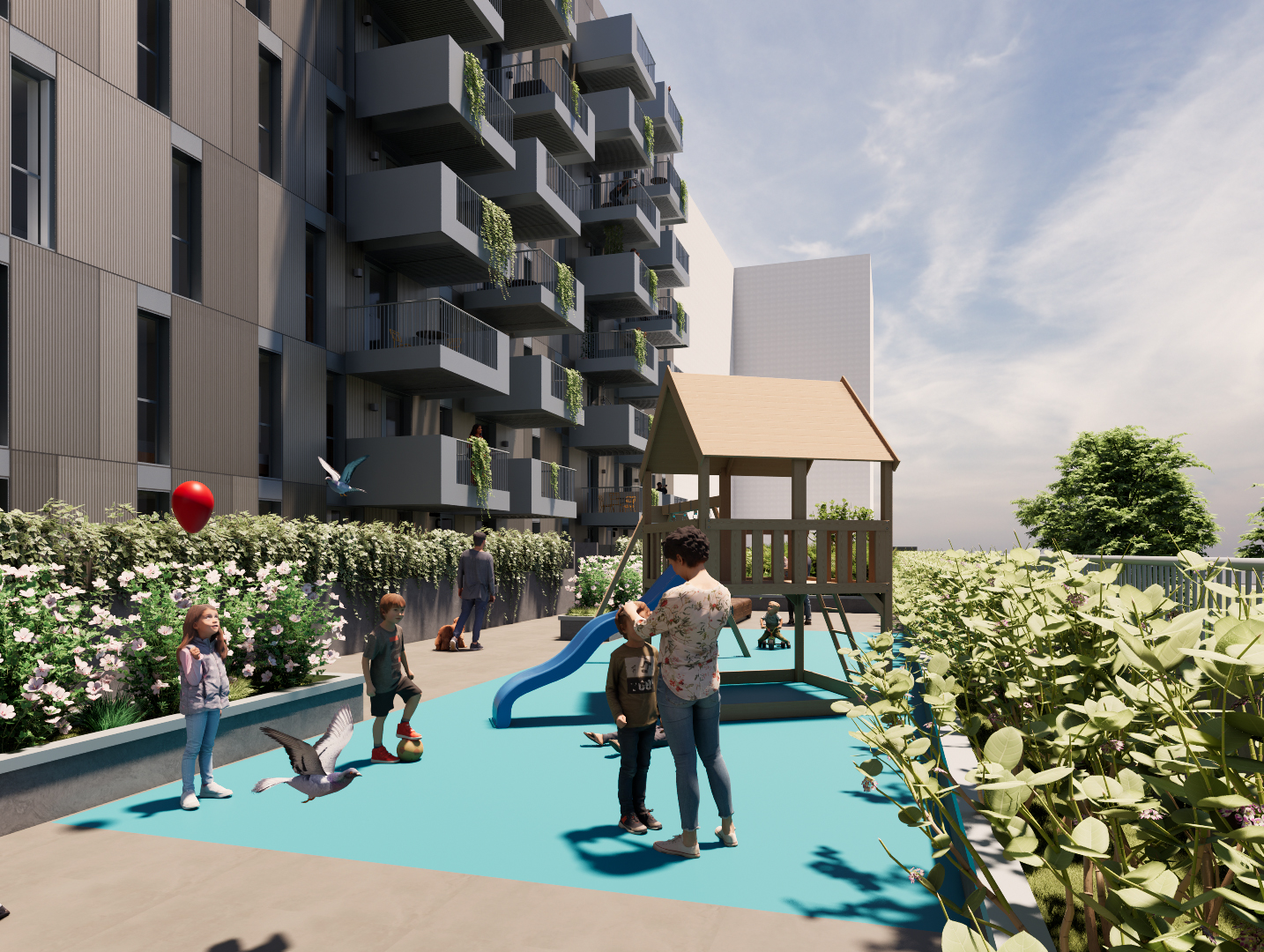
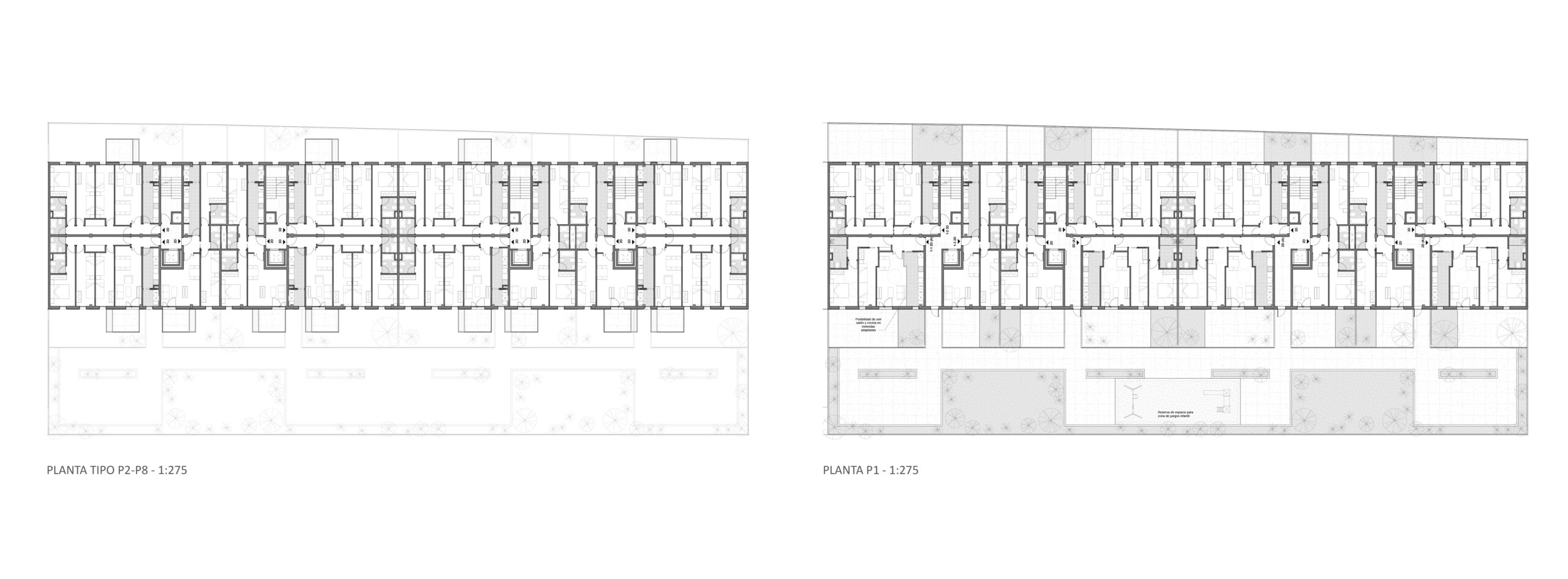
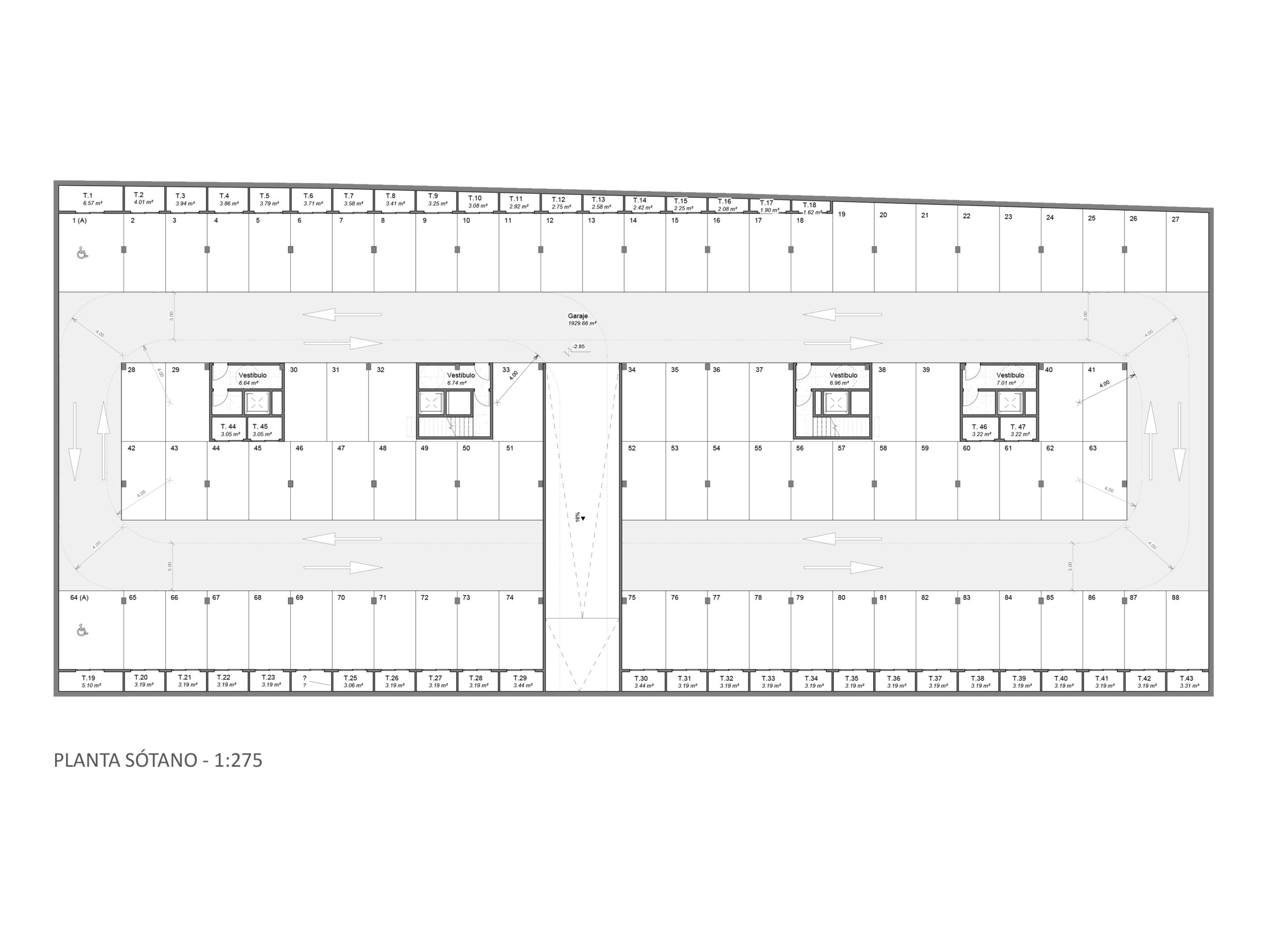
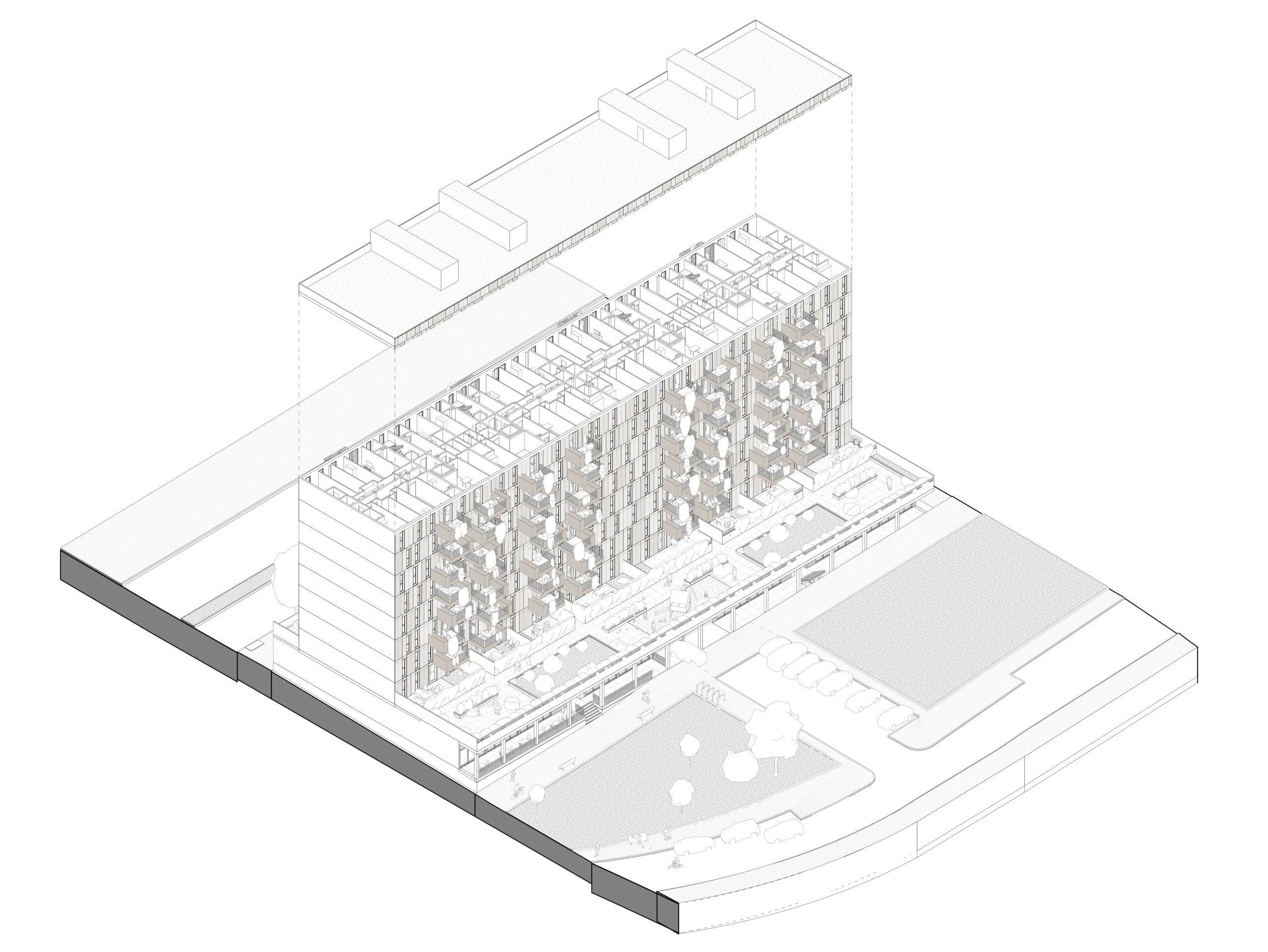
The project is conceived as a large-scale collective residential development, organized through a compact linear volume that clearly resolves the relationship between urban density, housing, and shared space. The built form defines a continuous street frontage while freeing a generous landscaped platform within the site, conceived as an extension of the domestic environment and as a communal space for residents.
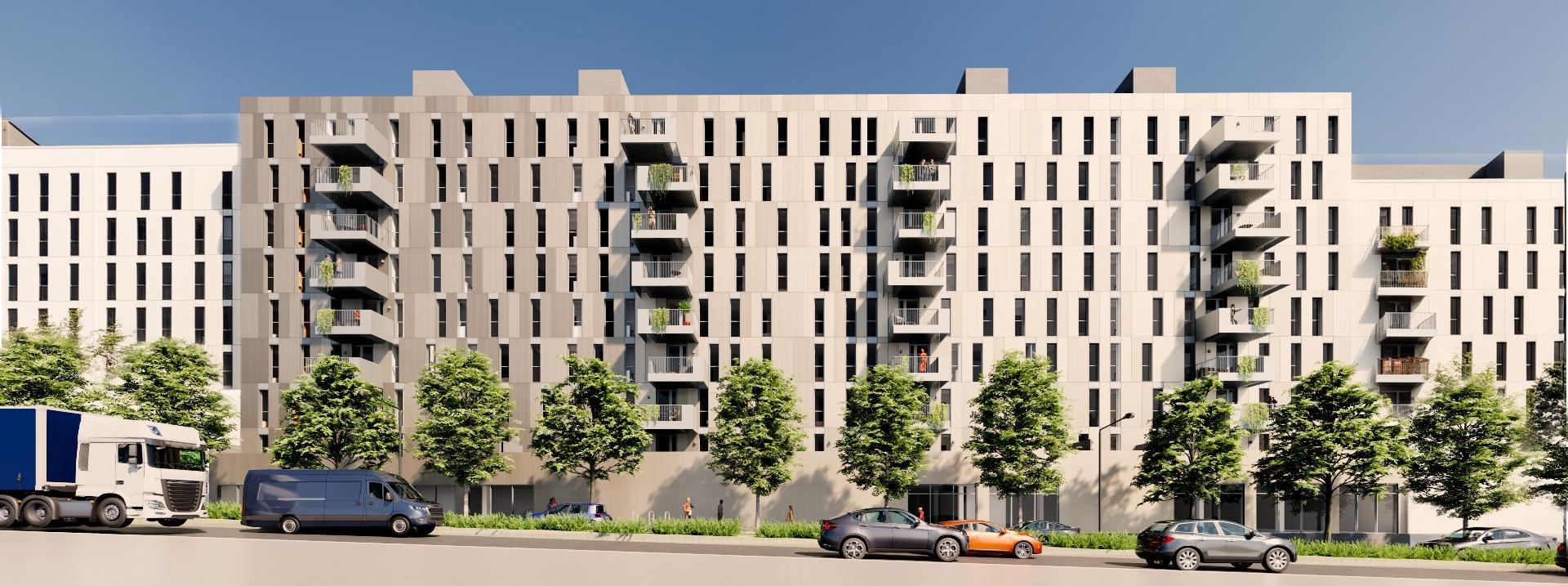
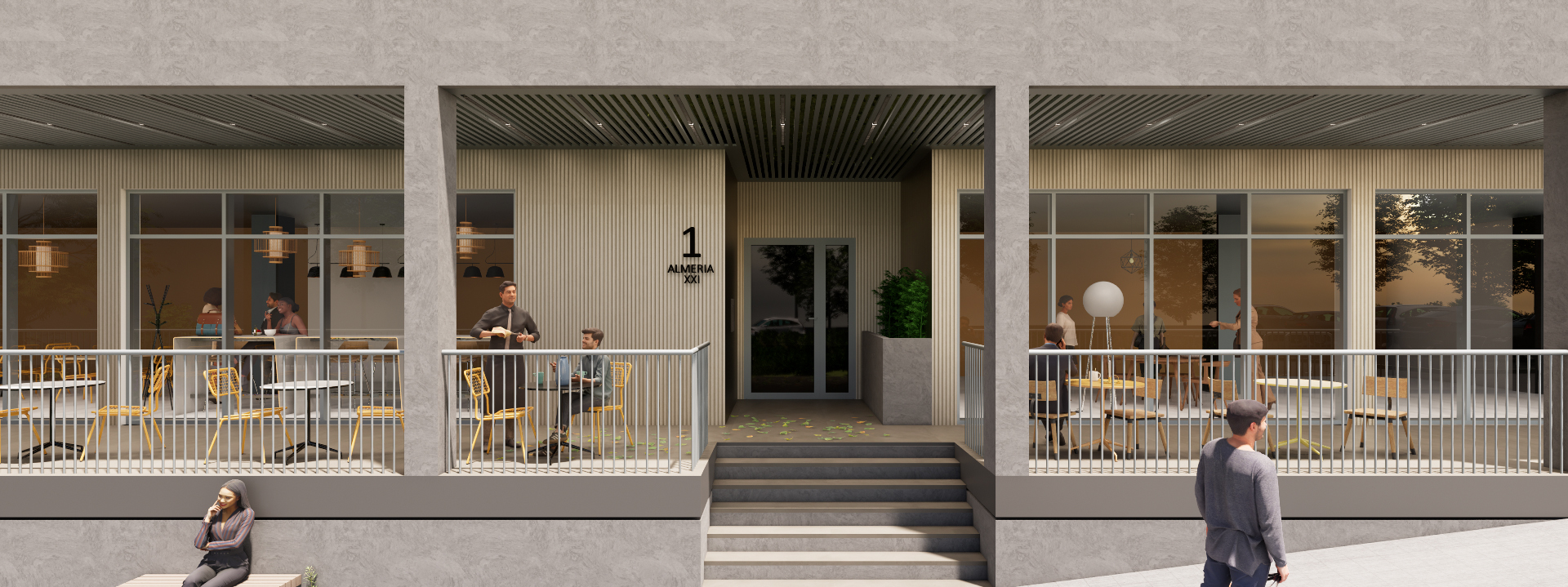
The layout responds to a distinctly urban condition. Toward the street, the building presents an ordered façade with a vertical rhythm and restrained architectural expression, integrating naturally into the scale of its surroundings. At ground-floor level, the base incorporates porches, generous openings, and recessed areas that soften the relationship with the public realm, provide shade, and define sheltered entrances. This lower level acts as a transitional zone between the city and the residential interior, avoiding an abrupt boundary while bringing activity to street level.
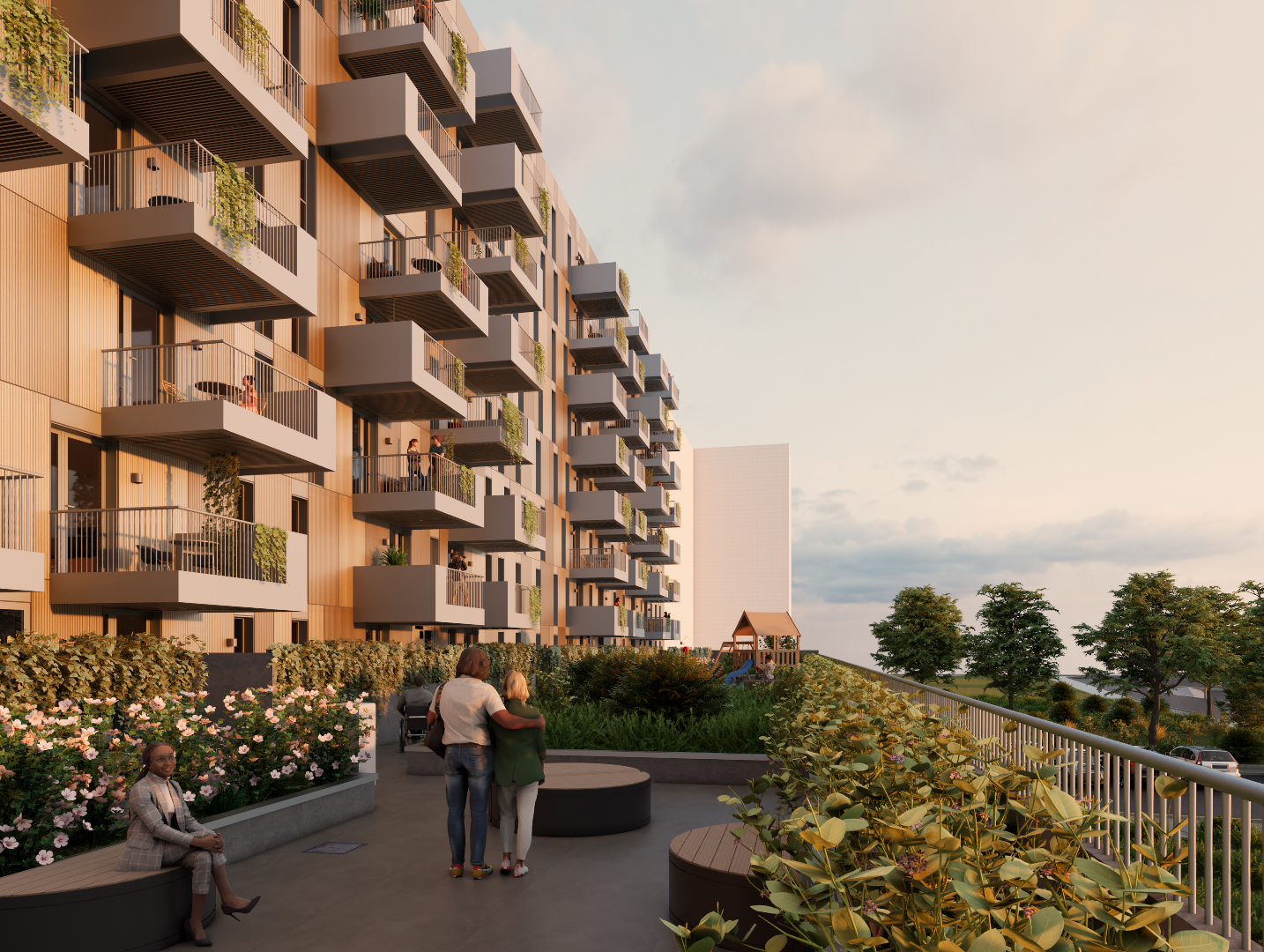
Circulation is organized through a clearly legible sequence of arrival. Residents and visitors identify the entrance through a covered threshold, pass through a transitional space, and access the building’s shared circulation system. Within the site, pedestrian routes are linked to landscaped areas, seating spaces, and play areas, so that circulation becomes more than simple movement, structuring the communal life of the development. The arrangement of these spaces promotes intuitive orientation and establishes a gradual transition between public, communal, and private realms.
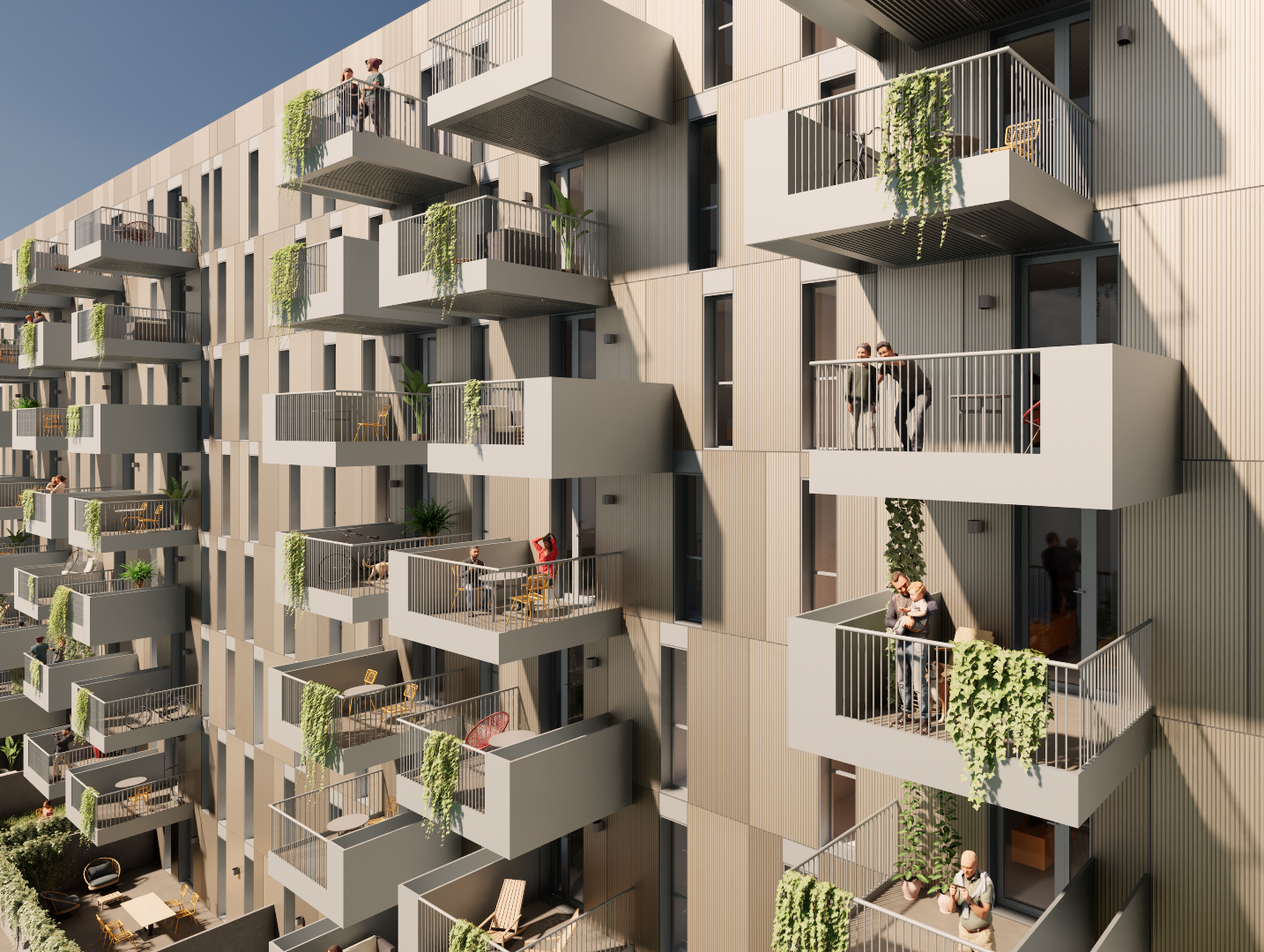
Natural light is carefully controlled through a modular façade composed of vertical openings, terraces, and recessed planes. The narrow, repetitive windows regulate daylight while preserving privacy, whereas the larger openings associated with the terraces strengthen visual connections with the exterior. The balconies function as intermediate spaces, extending the domestic environment, shading the façades, and filtering direct solar radiation. Planters integrated into balconies and terraces reinforce this climatic and visual filtering effect while introducing vegetation into the architecture.
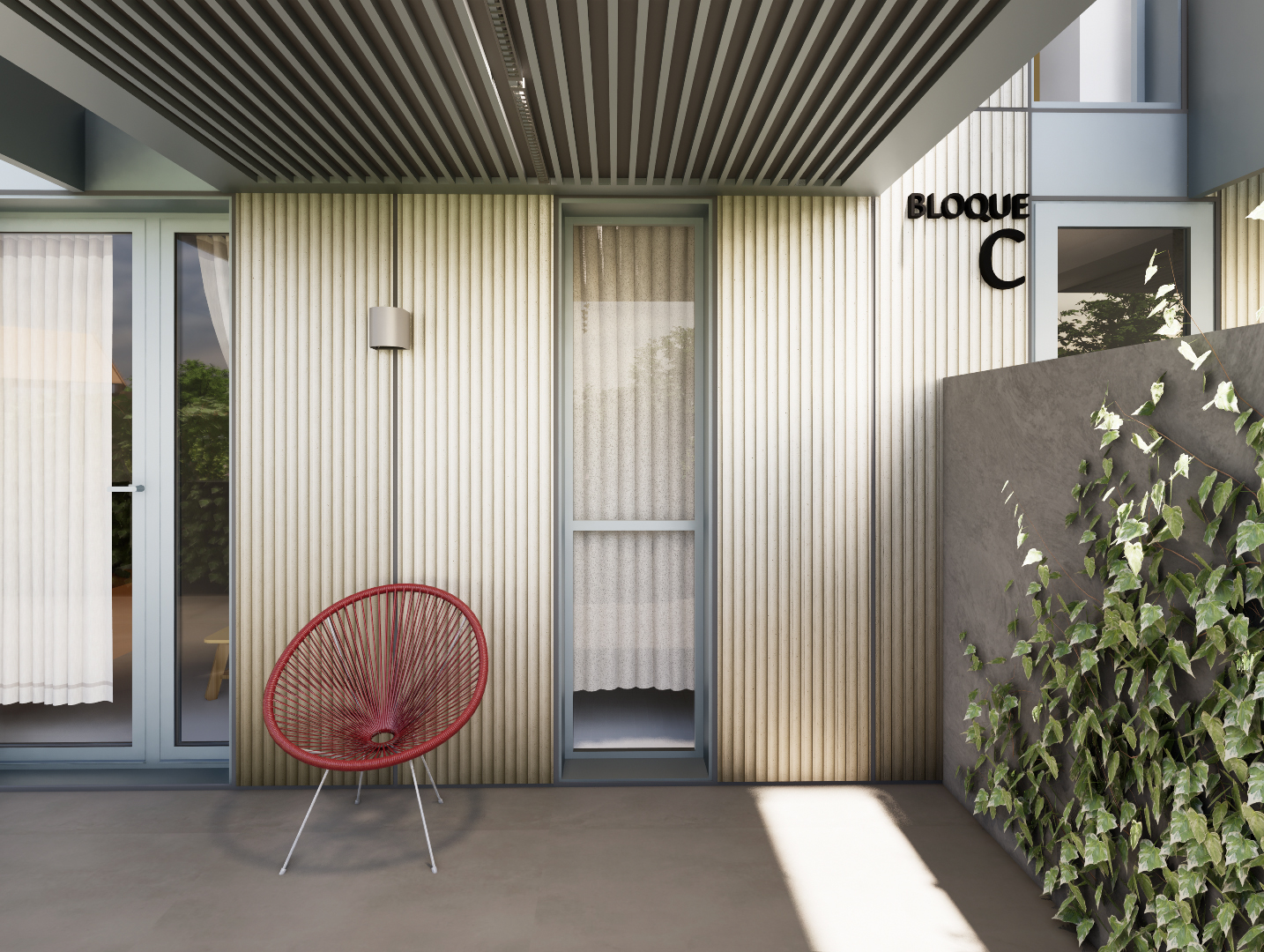
From a constructive perspective, the building expresses a precise and repetitive architectural logic well suited to its residential program. The envelope is composed of vertically textured surfaces, elongated window frames, and cantilevered balconies with lightweight metal railings. The combination of neutral materials, vertical textures, and projecting elements gives depth to the façade while maintaining an overall sense of sobriety. This modular approach facilitates construction, enhances durability, simplifies maintenance, and reinforces the legibility of the composition.
The communal landscaped courtyard plays a central role in the proposal. The terraces overlook this elevated garden, creating a more domestic, inhabited, and dynamic internal façade where vegetation softens the scale of the building. The sequence from dwelling to balcony, shared circulation, and landscaped garden establishes a residential experience based on continuity between interior and exterior spaces. The project therefore balances urban compactness with everyday quality of life, using natural light, clear circulation, rigorous construction, and shared outdoor spaces as the principal architectural tools for enhancing the experience of living.
TECHNICAL DATA
- BUILDING: 96 HOUSING UNITS (2025)
- PROJECT ARCHITECT: JOSÉ ÁNGEL FERRER
- CLIENT: PRIVATE
- LOCATION: ALMERÍA (ALMERÍA)
- GROSS FLOOR AREA: 9.556 m2

