

The project is developed on a predominantly rectangular site where the planning regulations establish a building with a ground floor plus five upper levels, organized in a “C” configuration and with a maximum building depth of 23 meters. Starting from this prescribed volume, the proposal reshapes the massing in order to improve the environmental conditions of the dwellings, optimizing orientation, natural lighting, and cross ventilation.
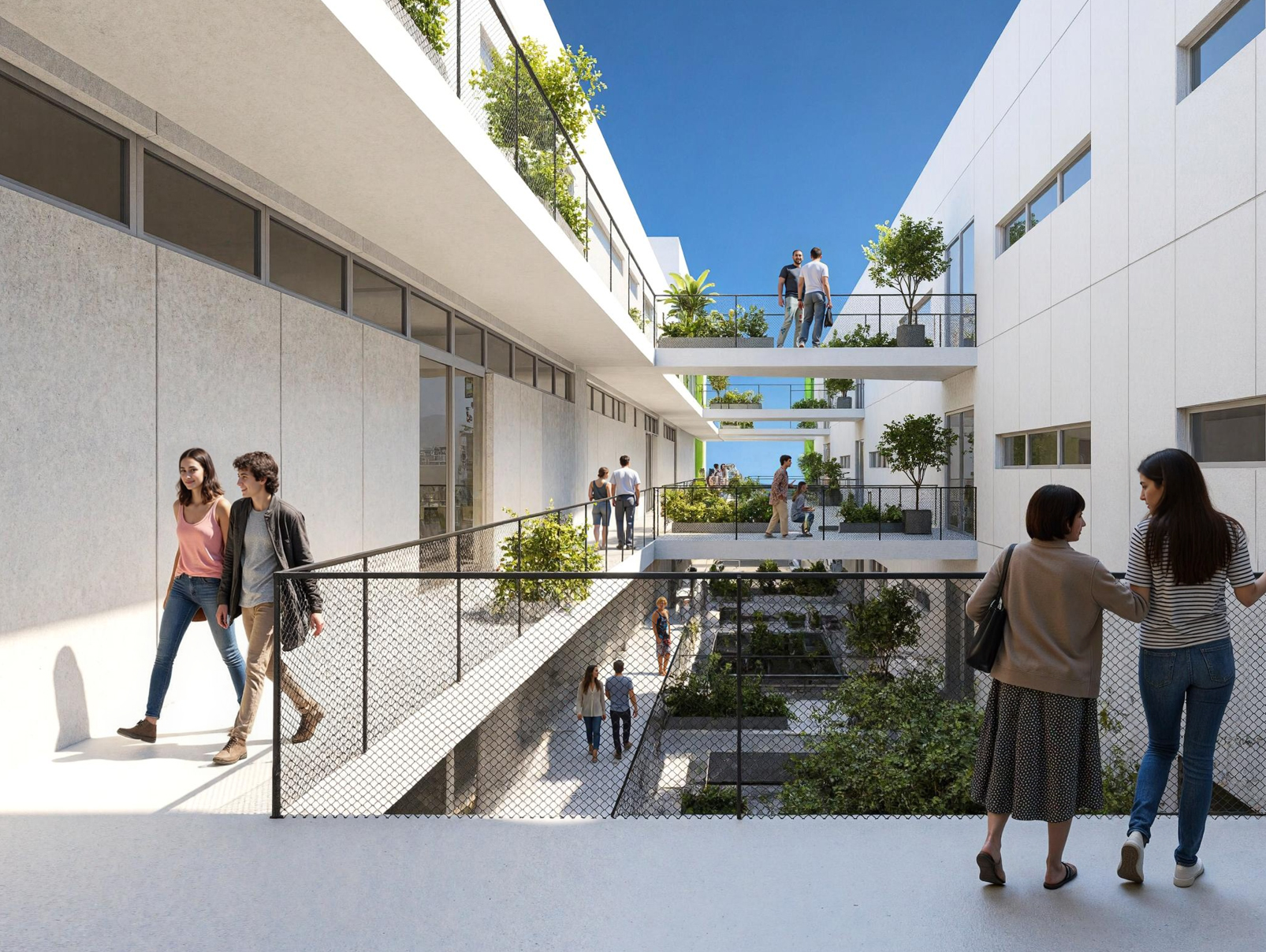
The main operation consists of opening an interior courtyard-gallery that reduces the effective depth of the structural bays and provides the dwellings with dual orientation. This strategy is particularly relevant in a building with façades facing north and west, as it minimizes units with poorer solar conditions while improving passive performance through cross ventilation and increased natural daylight.
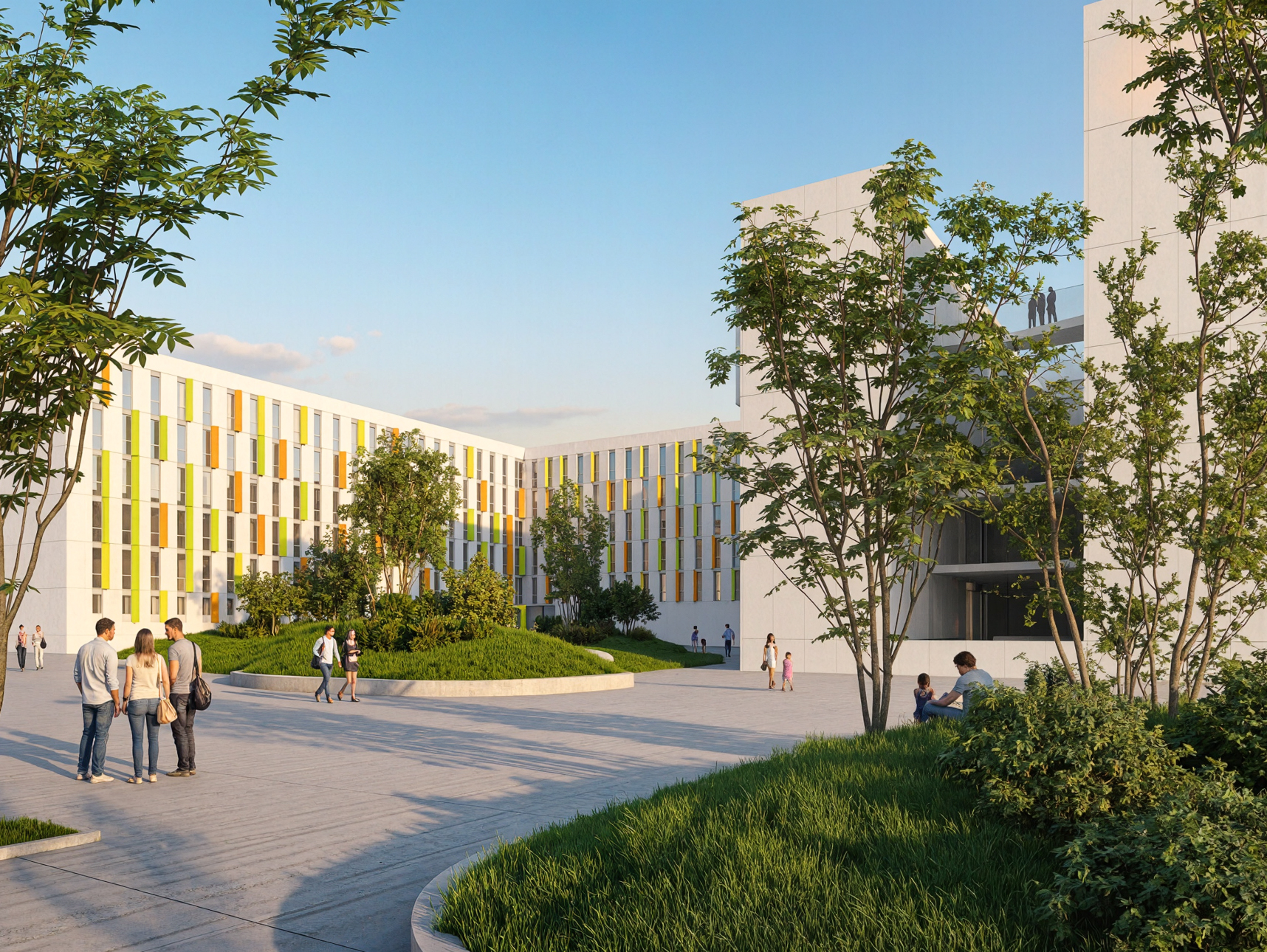
The inner courtyard is not conceived merely as a functional void, but rather as a landscaped collective space that structures the communal life of the building. Galleries, walkways, and open circulation routes generate a sequence of luminous transitional spaces linked to vegetation and neighborly interaction. Everyday circulation therefore acquires both a spatial and social dimension, surpassing its strictly distributive role.
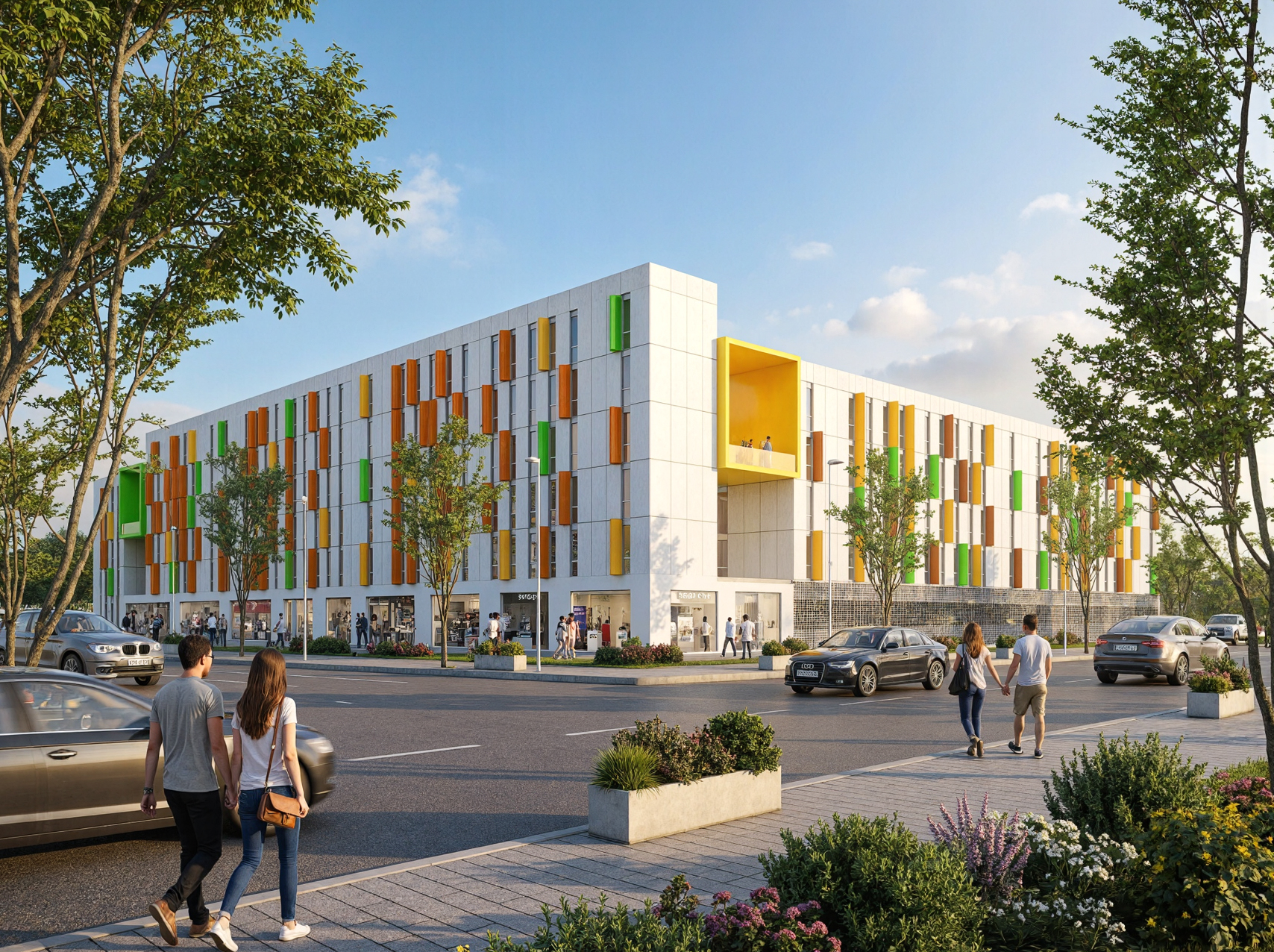
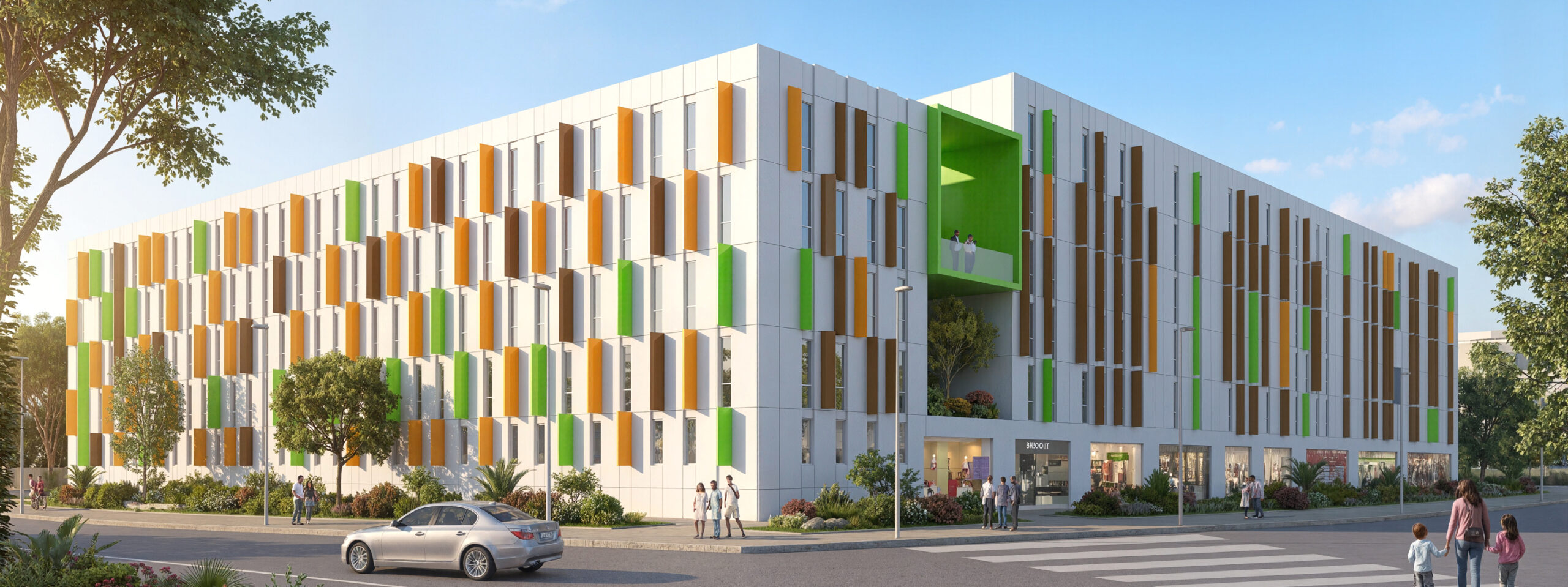
Toward the exterior, the building presents a clear and recognizable urban image. The white envelope, regular and modular in composition, is combined with colored vertical elements that protect the openings, filter solar exposure, and introduce rhythm to the façade. Large chromatic frames inserted at specific points emphasize entrances, terraces, and communal spaces, creating visual references within the compact volumetric composition.
The construction is based on principles of modulation, repetition, and envelope control, compatible with a rational and efficient execution process. The ground floor reinforces the relationship with the city through entrances, commercial premises, and pedestrian circulation routes, while the exterior vegetation softens the scale of the ensemble and extends the environmental strategy of the courtyard into the public realm.
The result is a compact yet permeable residential building that transforms natural light, shared circulation spaces, constructive clarity, and its relationship with the urban context into the principal architectural arguments of the project.
TECHNICAL DATA
- BUILDING: 165 SOCIAL HOUSING UNITS (2011)
- PROJECT ARCHITECT: JOSÉ ÁNGEL FERRER
- CLIENT: REGIONAL GOVERNMENT OF ANDALUSIA
- LOCATION: SAN JOSÉ DE LA RINCONADA (SEVILLE)
- GROSS FLOOR AREA: 21.615 m²

