

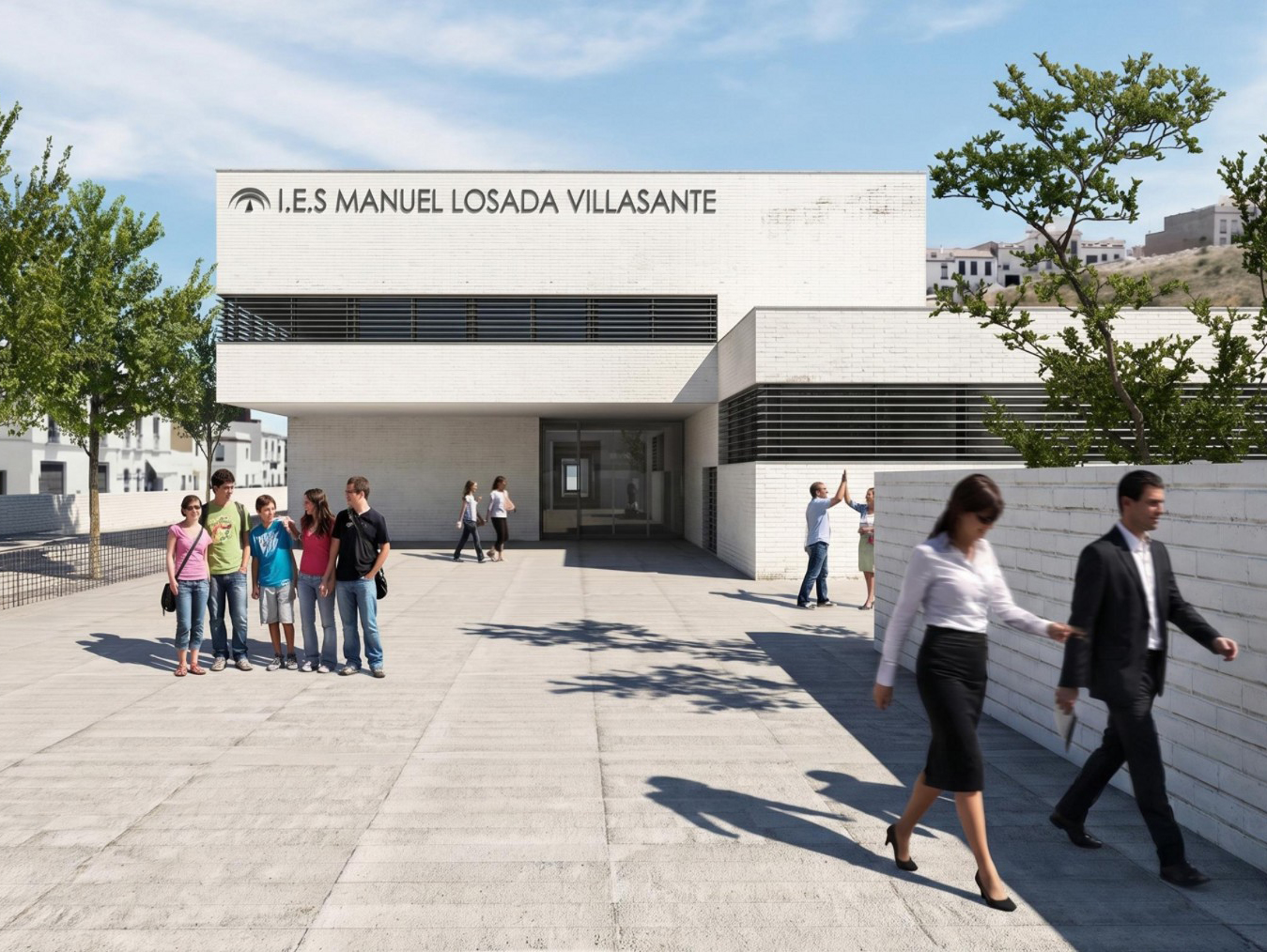
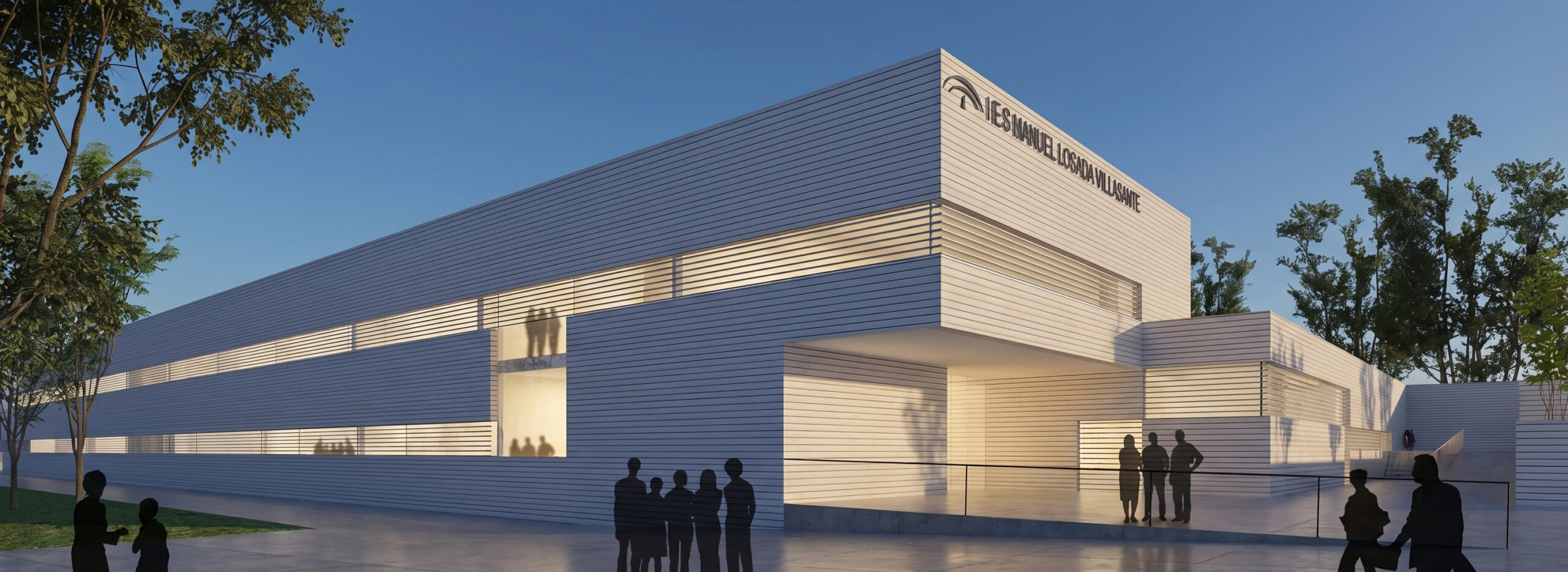
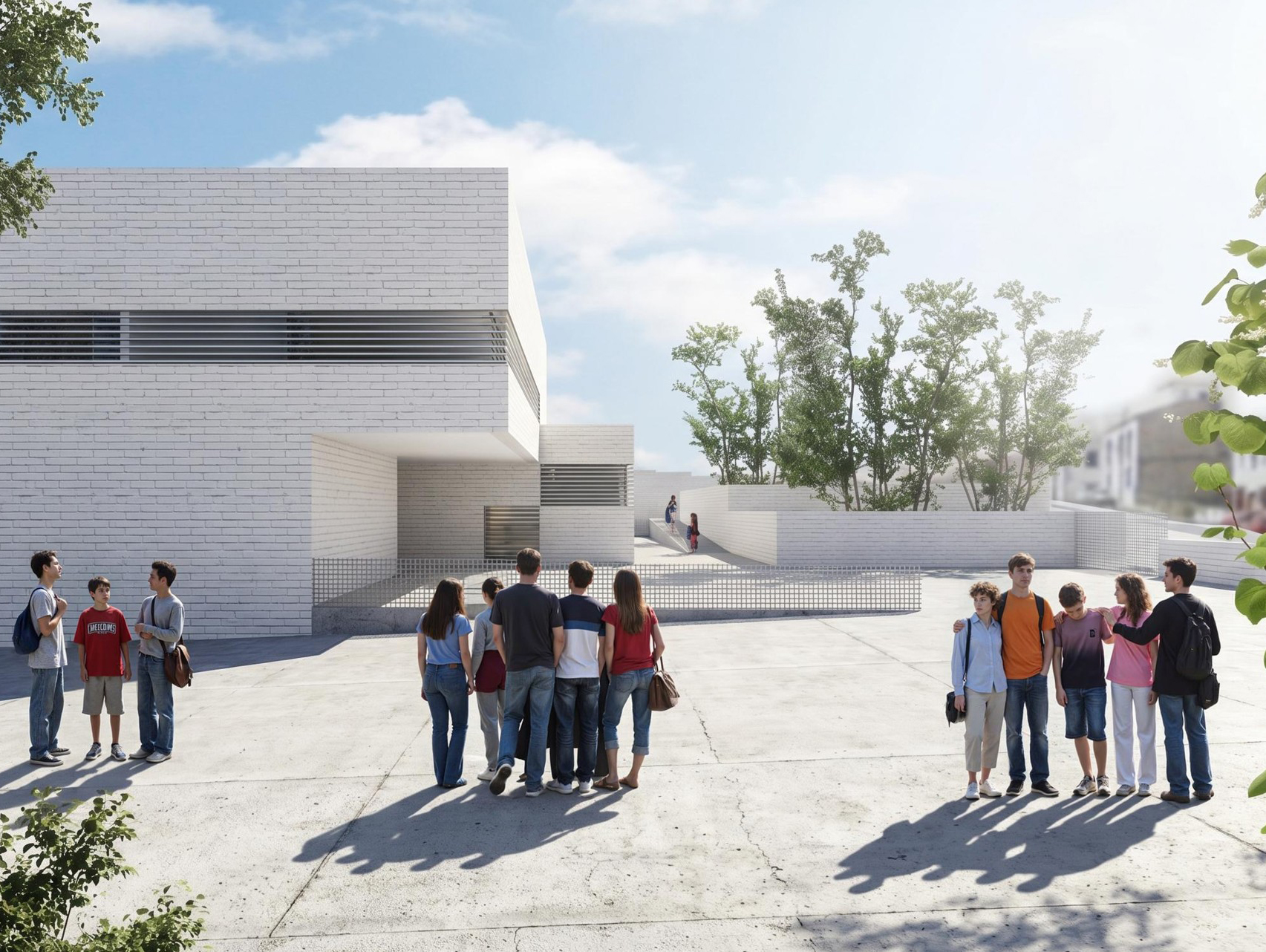
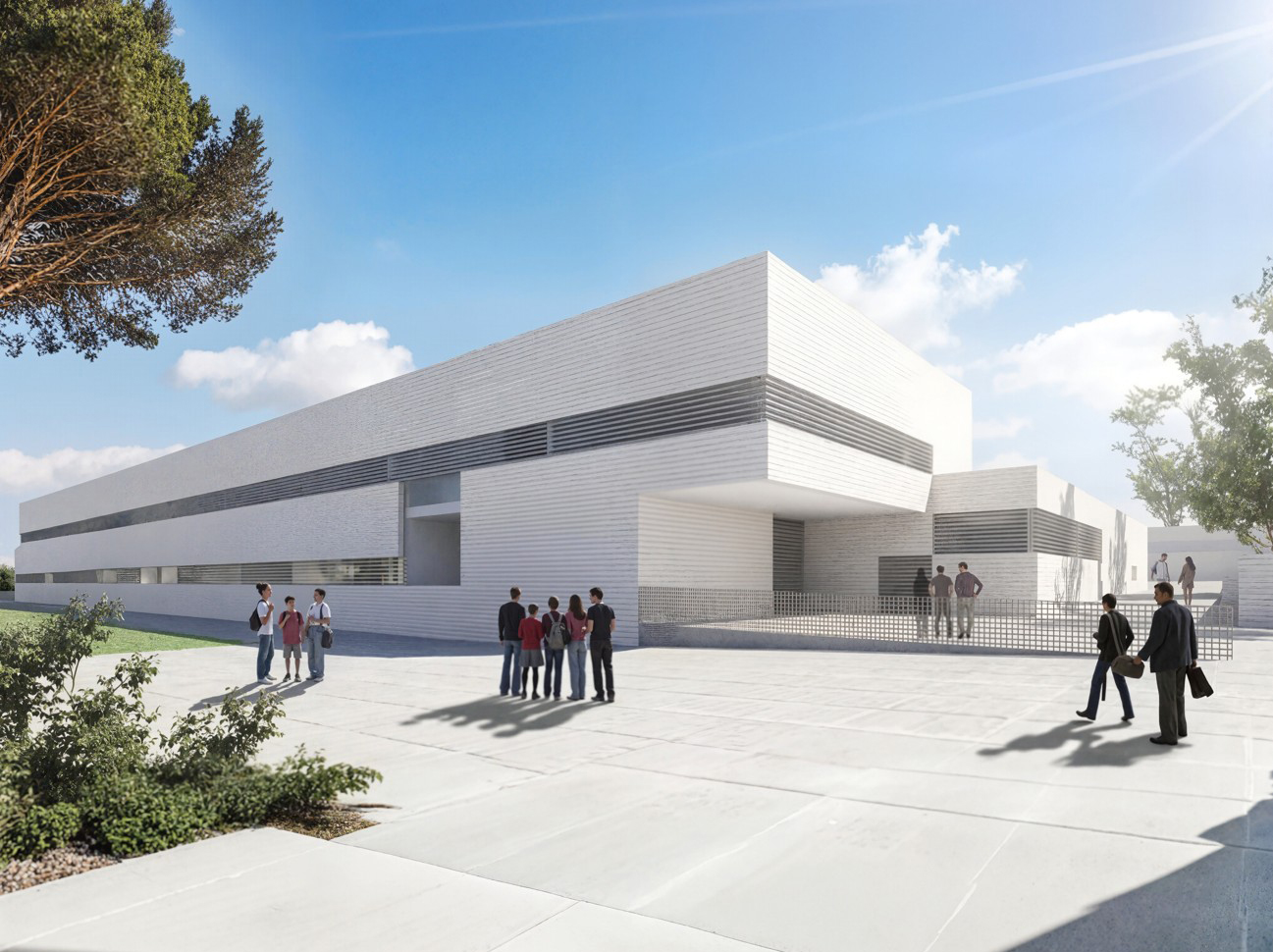
The building is conceived as a horizontal and compact volume, fragmented into pieces that organise its layout and generate articulated outdoor spaces. Access is defined through a setback that creates a covered threshold, establishing a clear transition between the urban space and the interior of the centre, while precisely organising entry flows.
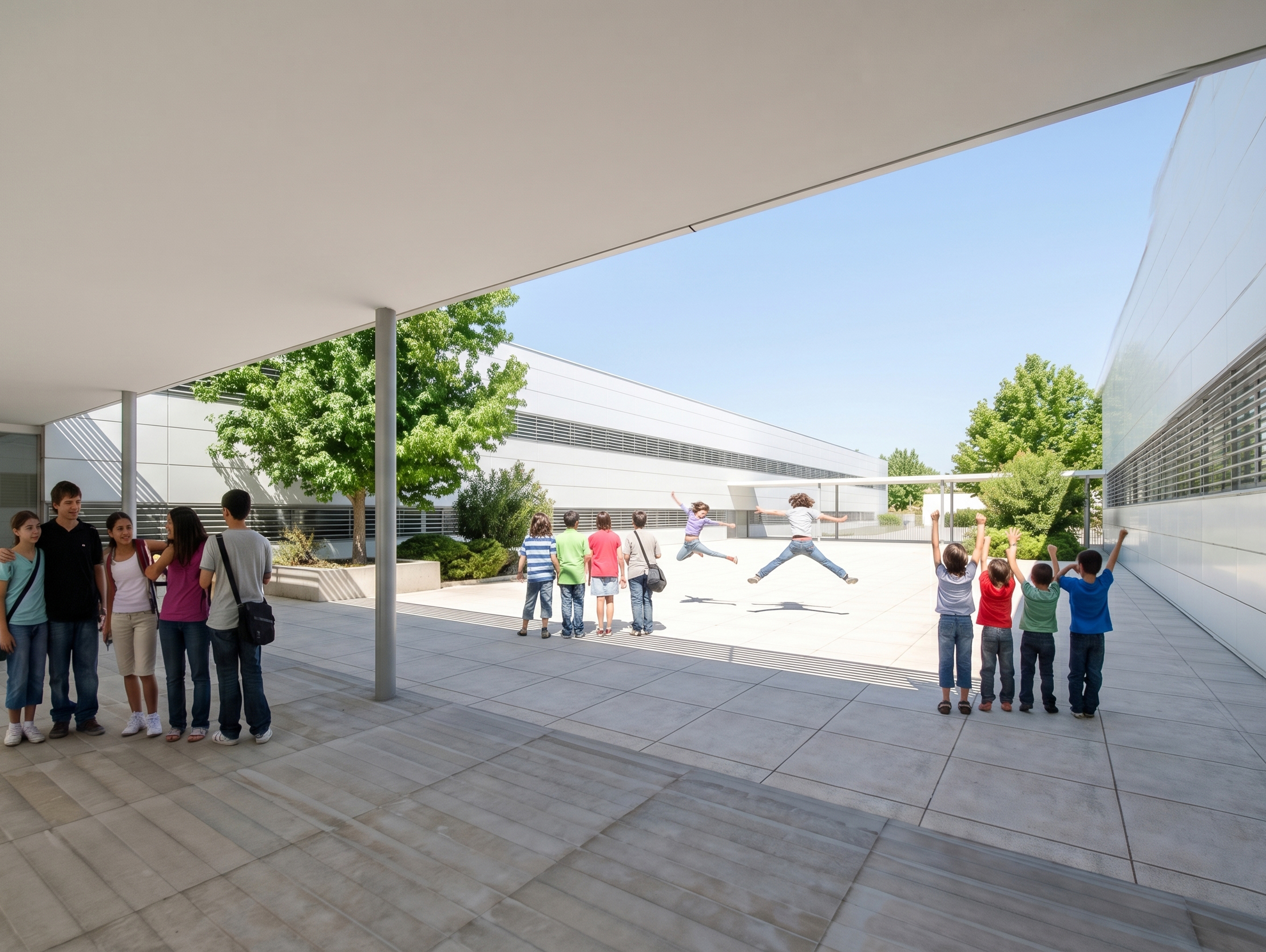
Natural lighting is resolved through continuous longitudinal openings protected by horizontal louvers, which filter solar radiation and ensure a uniform and controlled entry of light. The relationship with internal courtyards also allows for cross-lighting and a constant connection with the exterior.
Circulation is structured around courtyards that act as relational cores, facilitating orientation and enhancing the legibility of the building. Circulation routes are wide and continuous, combining interior and exterior spaces and encouraging both fluid movement and interaction among students.
From a constructive standpoint, the building adopts a modular and repetitive envelope, with a homogeneous materiality that reinforces the unity of the school complex. The resolution of louvers, joints and overhangs follows a precise logic that optimises construction, maintenance and thermal performance.
In relation to its context, the building integrates through a restrained scale and a layout that generates intermediate spaces and landscaped areas. The architecture does not compete with its surroundings, but rather organises them, introducing a balanced transition between the built form and its urban context.
TECHNICAL DATA
- BUILDING: IES MANUEL LOSADA VILLASANTE (2009)
- PROJECT ARCHITECT & SITE DIRECTOR: JOSÉ ÁNGEL FERRER
- CLIENT: REGIONAL GOVERNMENT OF ANDALUSIA
- LOCATION: CARMONA (SEVILLE)
- GROSS FLOOR AREA: 4.339 m2

