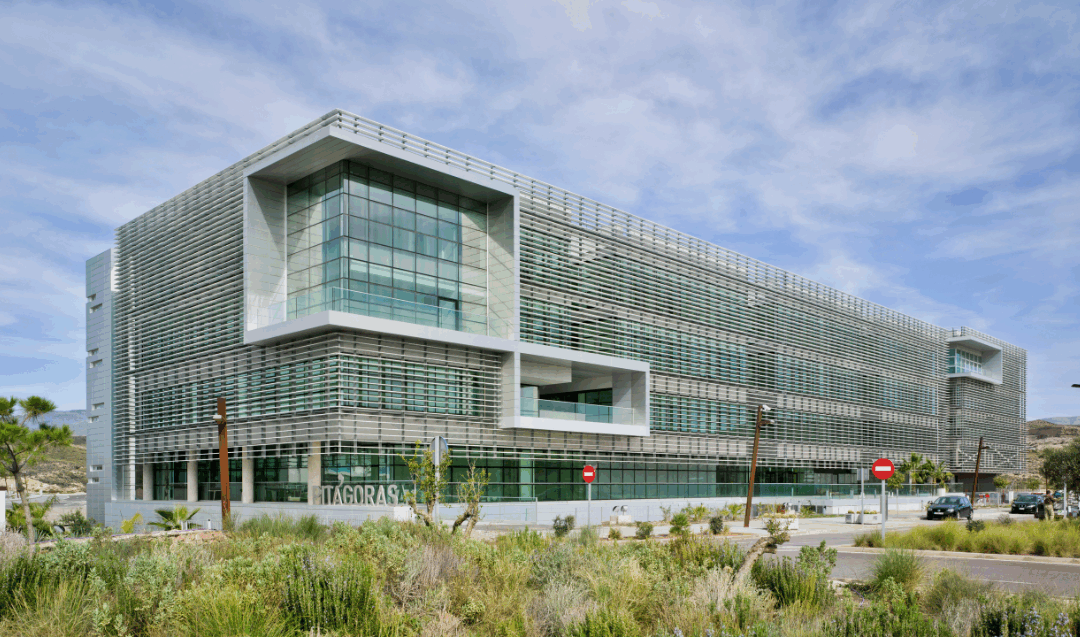
Source: ABC Sevilla
When a company decides to build its corporate headquarters, architecture ceases to be merely a functional matter and becomes an exercise in identity. Beyond providing a comfortable workspace that meets operational needs, the building must communicate the company’s philosophy and values, while also enhancing talent and productivity. This is the guiding principle behind Ferrer Arquitectos, a firm based in Almería and Madrid that has established itself as a benchmark in the creation of bespoke, multifunctional corporate spaces.
With a people-centered approach at its core, Ferrer Arquitectos focuses on developing high-performance environments that integrate complementary uses. Nurseries, gyms, restaurants, and auditoriums are incorporated alongside the main infrastructure, creating workplaces that also foster community and well-being. Notable examples of this comprehensive architectural vision include the buildings at the Almería Science and Technology Park (PITA) and Tecnova in Almería—two flagship projects that reflect the firm’s ability to respond to client values, specific needs, and the unique character of their surroundings.
Light as a defining element
One of the studio’s distinguishing features is its strategic use of natural light. Considered a highly valuable asset, natural light becomes almost a structural element in Ferrer Arquitectos’ designs. The result is buildings that seem to breathe—spaces that reflect their surroundings while delivering a level of visual comfort essential for those who work within them. Circulation within corporate buildings is also a key aspect of every project, designed to guide users intuitively and seamlessly connect different functional areas, always prioritizing usability and the overall user experience.
Another defining aspect of the firm is its contextual approach. Each project is tailored to its environment, respecting both the urban and natural identity of the location, as well as the client’s brand. This philosophy is complemented by the use of sustainable, reusable, and durable materials, reducing environmental impact and, consequently, long-term costs.
Customization as standard
Rather than imposing a signature architectural style, Ferrer Arquitectos adapts each project to the specific profile of the company. The design process always begins with an in-depth analysis of the client’s values and corporate culture. In this way, every project becomes a bespoke solution: from the initial concept to final execution, every element is aligned to ensure the building communicates the brand’s identity and how it wishes to be perceived. This creative flexibility enables the firm to undertake projects ranging from large administrative buildings to technology centers and commercial spaces—all under a common principle: the client’s identity takes precedence over any predefined aesthetic.
Corporate architecture is no longer just an aesthetic exercise. A well-designed headquarters can be far more than a place to work—it is a statement of identity that conveys a company’s purpose and leadership, creating an environment where people not only work but also feel inspired. In this context, Ferrer Arquitectos positions itself as a strategic partner for companies seeking more than just a headquarters: a space that expresses their essence.
Read the articule in ABC Sevilla.
For the first time in history, in the 21st century, more than half of the world’s population lives in cities. This trend, which continues to grow, must be carefully considered when planning the future of our territories, regions, and municipaliti
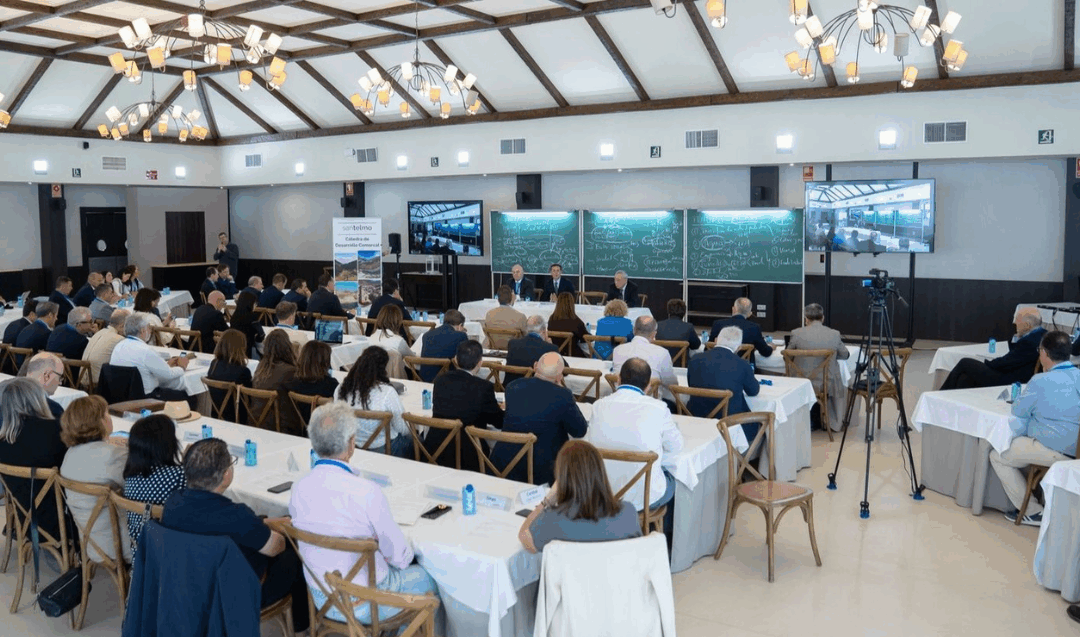
Last October, the International Institute San Telmo presented the “Chair of Regional Development” during a conference held in Olula del Río under the title “Present and Future of the Almanzora Valley: Lessons for Other Regions.” A well-conceived initiative aimed at promoting the development of rural Spain, which made a strong start by choosing the Almanzora Valley as its point of departure.
Throughout the conference, various ideas were discussed regarding the future of the Marble Region, most of them focused on the business and economic sphere. However, one key aspect received little attention: the quality of urban spaces, which plays a decisive role in people’s well-being and in their choice of where to live.
Having companies that generate high-quality employment—such as Cosentino, an international benchmark—is essential, but not sufficient, to retain population. Regional development also requires attractive spaces, strong services, and livable environments that encourage people to stay.
Experience shows that when these elements are lacking, what is already happening in the Almanzora takes place: a significant portion of those who work in the region live elsewhere, in cities such as Almería, Mojácar, Vera, or Baza.
Concentrating to thrive
Retaining population requires urban centers with sufficient scale and dynamism to generate synergies, foster services, attract talent, and offer a comfortable and stimulating quality of life.
One of the main challenges in the Almanzora is its population dispersion. Albox (12,510 inhabitants), its most populated municipality, does not reach the critical mass needed to act as a regional driver and is also located at one end of the valley.
Connectivity with the city of Almería and its port is also crucial. The closest point to the capital lies within the Macael–Olula–Fines conurbation, which should become the true heart of the Almanzora. A highway enabling travel in just over half an hour would represent a strategic leap forward for the region.
Three vectors for development
The growth of this conurbation should be supported by three main pillars:
- Business development
- High-quality urban spaces
- Modern and efficient public services
Without going into detail on each, it is worth highlighting some ideas regarding the latter two.
Urban spaces and services that generate life
The design of high-quality urban spaces should address both the improvement of existing urban fabric and the creation of new developments that consolidate the conurbation.
One possibility would be to promote a new shared urban area, equidistant from the three municipalities, structured around the Almanzora River through the development of a riverside park with residential, cultural, and service-related uses. An attractive, sustainable space with strong symbolic centrality.
In terms of public services, priorities include a regional hospital and a university center—linked either to the University of Almería or a private institution—offering education connected to industry, particularly natural stone, from technical processes to its more artistic dimension.
A new center of gravity for the Almanzora
Transforming the Macael–Olula–Fines conurbation (14,182 inhabitants) into the nerve center of the region—through its business fabric, urban quality, and service offering—would reshape the Almanzora in the coming years. It could consolidate itself as a leading technological-industrial hub in southeastern Spain, capable of generating wealth and opportunities beyond its boundaries.
The balanced development of this conurbation would radiate prosperity across all municipalities in the region, contributing not only to their well-being but also to that of the province of Almería and neighboring provinces.
The future of the Almanzora could be strengthened through greater integration between Macael, Olula, and Fines. This does not necessarily require a full administrative merger, as seen in the case of Don Benito and Villanueva de la Serena in Badajoz, although it could become a long-term objective for future generations.
The aim would be to begin shaping an urban model that goes beyond a simple association of municipalities or metropolitan area—one that respects and preserves the cultural and social identity of each town while harnessing the collective potential of its people and shared territory.
Ultimately, this would mean creating an advanced conurbation or urban nucleus where the combined population exceeds the current threshold of fifteen thousand inhabitants, reaching the critical mass needed to become the true center of the Almanzora region. A place with enough strength to attract new investment and better services, generating new opportunities and reinforcing regional identity without sacrificing the uniqueness of each locality.
José Ángel Ferrer.
Architect
Read articule published in Diario de Almería.
Case Study Cosentino
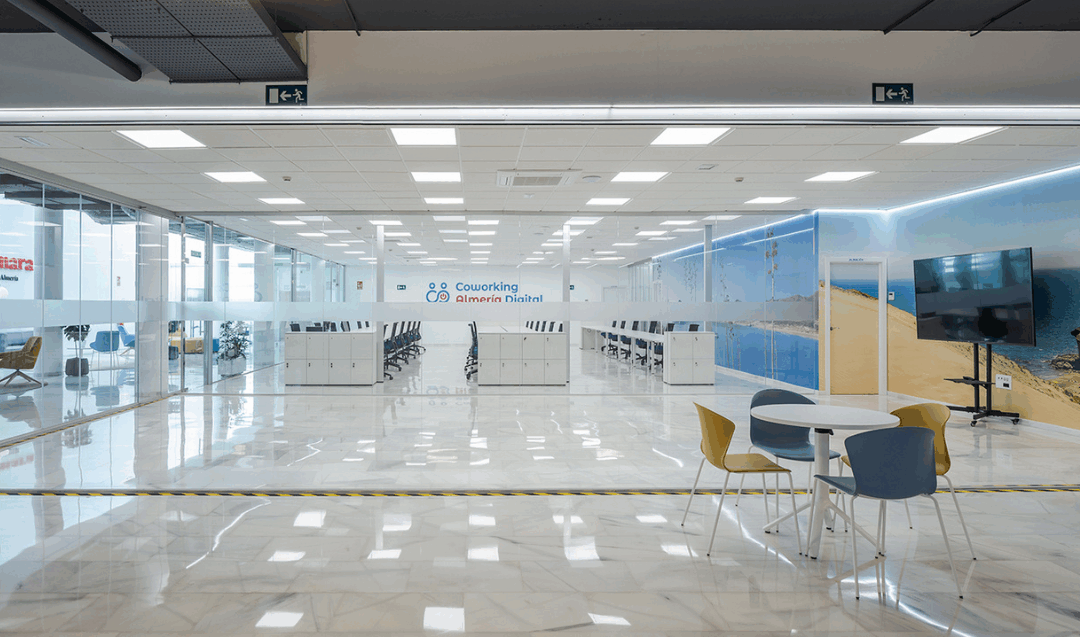
The Chamber of Commerce of Almería required a coworking space capable of hosting entrepreneurs, businesses, and digital nomads on a daily basis. To achieve this, José Ángel Ferrer, from Ferrer Arquitectos, was commissioned to transform a nearly 1,000-square-meter basement—dark, windowless, and uninviting—into a bright, attractive, and comfortable environment. The result is a people-centered design in which Dekton Eter takes center stage as the defining surface.
Today, beyond serving as a flexible workspace, it functions as a multifunctional hub featuring various meeting rooms, also used for training sessions, conferences, and events. “The challenge was to ensure the space no longer felt like a basement—to bring light into every corner and create a sense of depth and openness,” the studio explains.
Dekton, meeting the highest standards
Given the expected high turnover and diverse range of users, the space required materials with both strong technical performance and refined aesthetics. This is where Dekton came into play: “It was used in office and kitchen areas, for countertops, wall cladding, and flooring,” the architect notes. “We selected Dekton for its exceptional stability, high durability, natural appearance, clean design, and wide range of finishes.”
The aim was to achieve a neutral finish that would not compete with the surroundings. For this reason, the primary palette consists of black and white, complemented by accents of yellow and blue in chairs and stools—echoing the colors of Almería’s landscape: the earth, the sun, and the sea. Within this context, Dekton Eter was the natural choice.
With a dark, granite-like structure in shades of black and grey, Dekton Eter offers a subtle contrast in its background while maintaining a strong contemporary character, making it ideal for both indoor and outdoor applications. “Our experience has been highly positive and rewarding. It is an outstanding material for work surfaces—easy to clean and maintain, with a distinctly contemporary aesthetic,” the architect concludes.