For the first time in history, in the 21st century, more than half of the world’s population lives in cities. This trend, which continues to grow, must be carefully considered when planning the future of our territories, regions, and municipaliti
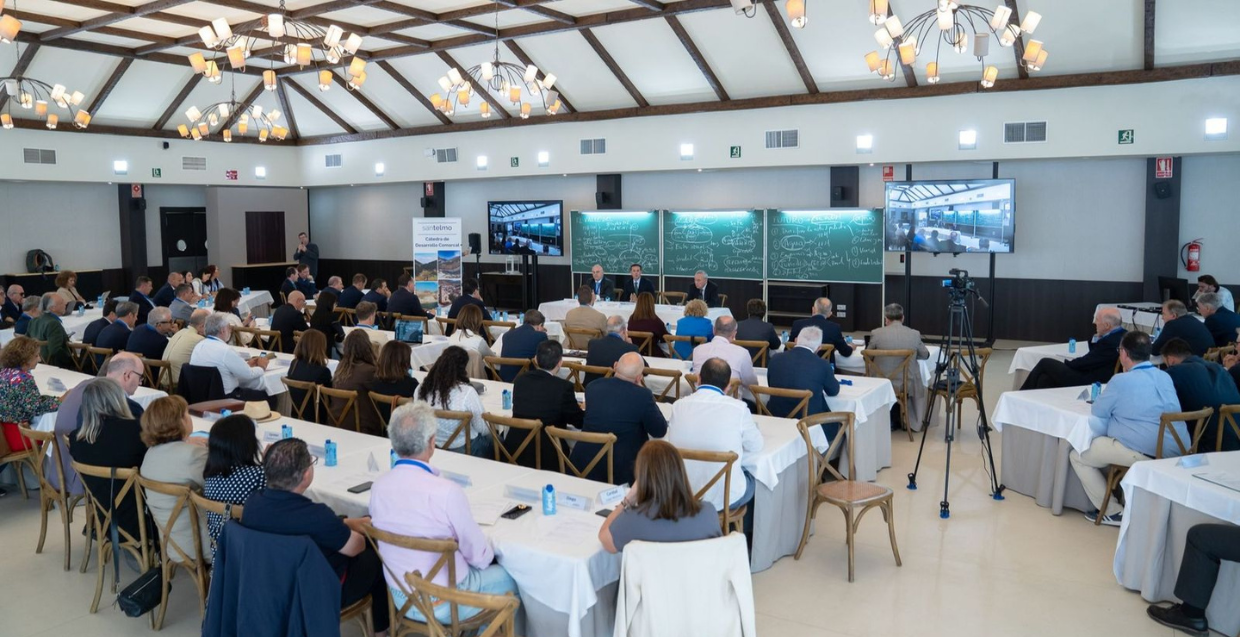
Last October, the International Institute San Telmo presented the “Chair of Regional Development” during a conference held in Olula del Río under the title “Present and Future of the Almanzora Valley: Lessons for Other Regions.” A well-conceived initiative aimed at promoting the development of rural Spain, which made a strong start by choosing the Almanzora Valley as its point of departure.
Throughout the conference, various ideas were discussed regarding the future of the Marble Region, most of them focused on the business and economic sphere. However, one key aspect received little attention: the quality of urban spaces, which plays a decisive role in people’s well-being and in their choice of where to live.
Having companies that generate high-quality employment—such as Cosentino, an international benchmark—is essential, but not sufficient, to retain population. Regional development also requires attractive spaces, strong services, and livable environments that encourage people to stay.
Experience shows that when these elements are lacking, what is already happening in the Almanzora takes place: a significant portion of those who work in the region live elsewhere, in cities such as Almería, Mojácar, Vera, or Baza.
Concentrating to thrive
Retaining population requires urban centers with sufficient scale and dynamism to generate synergies, foster services, attract talent, and offer a comfortable and stimulating quality of life.
One of the main challenges in the Almanzora is its population dispersion. Albox (12,510 inhabitants), its most populated municipality, does not reach the critical mass needed to act as a regional driver and is also located at one end of the valley.
Connectivity with the city of Almería and its port is also crucial. The closest point to the capital lies within the Macael–Olula–Fines conurbation, which should become the true heart of the Almanzora. A highway enabling travel in just over half an hour would represent a strategic leap forward for the region.
Three vectors for development
The growth of this conurbation should be supported by three main pillars:
- Business development
- High-quality urban spaces
- Modern and efficient public services
Without going into detail on each, it is worth highlighting some ideas regarding the latter two.
Urban spaces and services that generate life
The design of high-quality urban spaces should address both the improvement of existing urban fabric and the creation of new developments that consolidate the conurbation.
One possibility would be to promote a new shared urban area, equidistant from the three municipalities, structured around the Almanzora River through the development of a riverside park with residential, cultural, and service-related uses. An attractive, sustainable space with strong symbolic centrality.
In terms of public services, priorities include a regional hospital and a university center—linked either to the University of Almería or a private institution—offering education connected to industry, particularly natural stone, from technical processes to its more artistic dimension.
A new center of gravity for the Almanzora
Transforming the Macael–Olula–Fines conurbation (14,182 inhabitants) into the nerve center of the region—through its business fabric, urban quality, and service offering—would reshape the Almanzora in the coming years. It could consolidate itself as a leading technological-industrial hub in southeastern Spain, capable of generating wealth and opportunities beyond its boundaries.
The balanced development of this conurbation would radiate prosperity across all municipalities in the region, contributing not only to their well-being but also to that of the province of Almería and neighboring provinces.
The future of the Almanzora could be strengthened through greater integration between Macael, Olula, and Fines. This does not necessarily require a full administrative merger, as seen in the case of Don Benito and Villanueva de la Serena in Badajoz, although it could become a long-term objective for future generations.
The aim would be to begin shaping an urban model that goes beyond a simple association of municipalities or metropolitan area—one that respects and preserves the cultural and social identity of each town while harnessing the collective potential of its people and shared territory.
Ultimately, this would mean creating an advanced conurbation or urban nucleus where the combined population exceeds the current threshold of fifteen thousand inhabitants, reaching the critical mass needed to become the true center of the Almanzora region. A place with enough strength to attract new investment and better services, generating new opportunities and reinforcing regional identity without sacrificing the uniqueness of each locality.
José Ángel Ferrer.
Architect
Read articule published in Diario de Almería.

